
 Go to Nicosia, Cyprus and this museum with a spectacular overview of Cypriot coinage. It looks like a small museum in terms of square meters: just one room within the Nicosia headquarters of the Bank of Cyprus. This one room however houses a most interesting mixture of historic overview and coins. Starting from the 6th century BC, every window shows a period of life in Cyprus with its own rulers and coins. The explanation is clear and quite complete without being too much and the coins reflect both financial habits and general culture. We see Cyprus divided in cities and Cyprus as a united kingdom and how Cypriot coinage developed all over those periods. And it all ends up with the Euro of course 🙂 To be honest, I am not interested in the Euro but I found the large collection of different very old coins amazing. Learn not only about the ancient times in Cyprus but also about the city of Amathus in the 5th/4th century BC with its own writing that was never deciphered so far… See coins with the word ‘Wroikos’ on it without having a clue who or what ‘Wroikos’ is…
 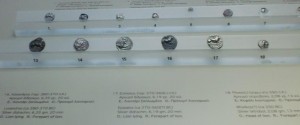 Here is a job to do for someone who likes puzzles; one of the last undeciphered languages!
Modern times alas tend to make me sad. In 1976 the Central Bank of Cyprus issued commemorative coins for what is called on the Greek Cypriot side the Turkish invasion of Cyprus in 1974: it shows twice a mother and child, in front of a destroyed house and in front of a tent. 
For the rest, the ‘other’ side of the island Cyprus does not exist in this exhibition; Cyprus is either the past, or Greek Cyprus. However, that past is shown so brilliantly here that I highly recommend this museum! The entrance, by the way, is free but worth a price.
Other blogs about museums with coins:
Money Museum Tunis
Money Museum Gaziantep
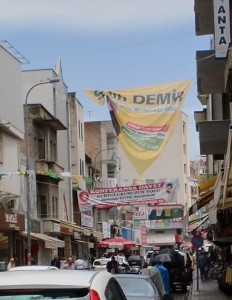
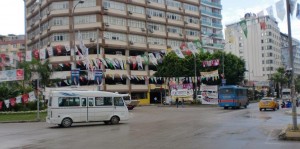 Elections in Turkey are coming up and it is impossible to overlook them! I went to a trade mission in Adana and Mersin last week with the Dutch ambassador, his team and other entrepreneurs and we saw and heard the elections everywhere. Cars with loudspeakers shout out their messages: ‘Hey Adana’ and then the text of their campaign follows in a volume that forms an interruption for your conversation – just wait untill they passed to continue.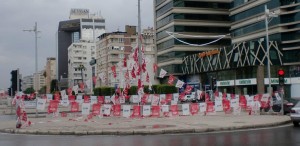


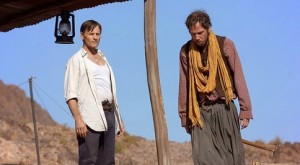 Loin des hommes


 It attracts immediate attention, but the scenery remains a secret. Is someone mourning or did he just kill someone? The Latvian national museum proves that language is an essential tool in the 21st century. If we want to know and understand each others culture, showing our historic items is not enough. Neither are intuition or imagination – those strongly add to our quality of life, but not to understanding reality. Language, words that can be interpreted are essential in intercultural exchange.
 “Who tells your history?”, says another intruiging exhibition in the Stockholm National Historical Museum / Historiska Museet (