Abadi church – Northern Cyprus heritage (17)

abadi church northern cyprus

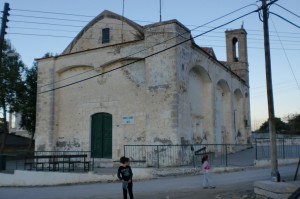
We were looking for the Melendirina church – a church that was on an urgent list for reparation on UNDP initiative in 2012 – when we came across the Abadi church. At first we did not know at all what kind of church it was; there is absolutely a lack of information about the churches in the Esentepe / Agios Ambrosius area. Any information you look for leads you to the Antiphonitis monastery – see our blogs Panagia Eleousa church and Agios Mamas church for the rest, churches seem to be considered uninteresting or non-existent. That is such a pity as we showed in the blogs 14, 15 and 16 of this Northern Cyprus heritage series that there is a lot to be discovered. Esentepe is not a touristic area which might be the reason why it is so difficult to find out more about the specific sites.
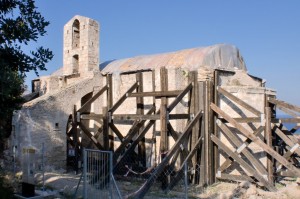
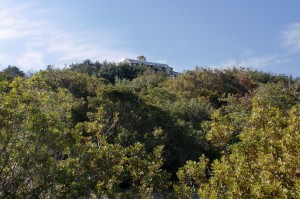
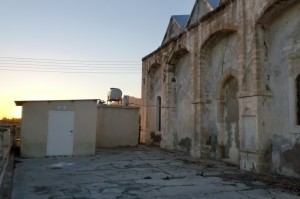
It was not clear how to get to the Abadi church when we saw it, driving our way through the mountain forests above Esentepe; so we ended up by just parking the car among the trees and walked our way up to the mountain. And there it appeared, the Abadi chapel, in all its beauty. Alas it was closed so we could not see the inside. The doors of the chapel looked quite new which gave us (born from experience) the idea that there was nothing inside any more and that doors were placed recently to protect the last bits and pieces. Please try to enter one day and prove us wrong.
abadi church northern cyprus  abadi church northern cyprus
As we had no clue about the chapel, its name or origin, we concluded from the surroundings that it had had a courtyard with beautiful trees, so it was an important center, some time, some day. Later we read on internet that it had been a monastery that was ruined and  that a small church was built to replace the institute. So this is some kind of hidden secret in the middle of the forest on the hills above Esentepe / Agios Ambrosius


Panagia Eleousa church – Northern Cyprus heritage (16)

panagia eleousa2


Panagia Eleousa church in Tirmen/Trypimeni is another church that was turned into a mosque after the Turkish army took hold of Northern Cyprus in 1974. The church seems to be in a reasonable estate, just like the village itself that is not the wealthiest village to be found in the area either. The village lies right on the south side of the Pentadaktylos mountain range and overviews the Mesaoria plain that separates the Troodos mountains on the Greek side from the Pentadaktylos mountains on the Turkish side. Apparently the Mesaoria was a sea in very old times; so the symbolic separation was already there in history…
panagia eleousa church  panagia eleousa church
The only information that I could find about the Panagia Eleousa church is that it was built in 1900. I was wondering about the tower, it seems to be a different style than the church, made from different materials, attached to the church externally from the side and put right in front of an opening fence; all this suggests that it was added later. The Panagia Eleousa church is more beautiful without it. panagia eleousa church clock tower
The clocks from the church tower are missing. For the use of the mosque some small details were added like cleaning rooms and they are quite ugly.
If you have more info about the Panagia Eleousa church, feel free to comment. In this Northern Cyprus heritage series there are other blogs showing churches that were turned into mosques after 1974, see Agios Ambrosius church and Agios Mamas church.

Agios Mamas church – Northern Cyprus heritage (15)

agios mamas church bahceli


Agios Mamas church
In Bahceli (Kalograia), about 20 miles east from Girne, there is another church that was turned into a mosque at an early stage, already in 1975 so very short after the Turkish army took hold of the Northern part of Cyprus. It is the Agios Mamas church Bahceli, named after Saint Mamas who lived in the 3rd century and seemed to be quite brave – his best companion being a lion. Read some more about him at http://orthodoxwiki.org/Mamas_of_Caesarea .
From the outside the church seems to be in a reasonable stage – note that the village itself looks rather poor. Only the clock tower is at riskagios mamas church bahceli as the picture here shows. The clock itself is still there but seems to have fallen down and rest on the wall sides.
We have not seen the inside. I could not find a lot of information about this church at all. Those who know more (facts), feel welcome to comment.
Agios Mamas is not the only church in this region transformed into a mosque, read also Agios Ambrosius church , another blog about Tirmen/Trypimeni will follow. You can find it here: Panagia Eleousa church
agios mamas church bahceli    agios mamas church bahceli

Agios Ambrosius church – Northern Cyprus heritage (14)

agios ambrosius church northern cyprus In Esentepe, a small town about 20 miles to the east of Girne, we find the Agios Ambrosius church that has been transformed into a mosque in 1978 already; this happened in more villages in this part of Northern Cyprus (other blogs will follow). Agios=Saint Ambrosius was a very influential bishop of Milan and a Doctor of the Church in the 4th century. The Agios Ambrosius church was built in 1867 out of yellow stones and characterizes very much the Byzantium architecture. It seems to be in quite a good state (we did not see the interior but the exterior looks fine) and in general inhabitants take care of the city center where it stands.
Actually with the peace talks between North and South Cyprus making progress, the question is raised what will happen to churches that were turned into a mosque. Time will tell… first bring the peace talks to a good end, then solve this too.     esentepe-ambrosius  esentepe-ambrosius2  esentepe-ambrosius3

Other churches near Esentepe:
Abadi church
Panagia Melandrina church

Dheepan: an outstanding movie about refugees

dheepan movie

Dheepan is somehow a ‘neutral’ movie about refugees as it concerns refugees from Sri Lanka; I worked with many of them in the ’90ties but today we concentrate on other regions as every reader knows. Technically this choice in the movie creates a healthy distance to emotions in actuality. And practically, it makes no difference.
Refugees run for a reason, most often a quite serious one. And yes, they are surrounded by luck-seekers, criminals who have other reasons to flee and economic migrants. Making the difference between one and the other is an ideal but in practice not very easy. However the movie is not about asylum policies and dilemmas, it is about how people flee and become a refugee and how they experience the country in which they arrive.
In this movie, the Sri Lanka refugees find a house and a job in the banlieu of Paris, in one of the worst banlieus – I think the movie maker even wanted to point out that the refugees run from a war to end up in another one. It is as much a complaint against the ‘drugs in banlieu’ situation as about the refugee situation. Specifically, the total lack of law enforcement (no police or authorities at all) surprises the public.
I think the movie is brilliant in the way it depicts the refugees. I recognized every emotion, both in daily life and in the history of violence and resistence that refugees from war and conflict areas bring with them – not as a choice but as a fact. My experience with that is both friendship and work and I found the movie Dheepa shiveringly realistic and very strong in the way of showing the emotional side.
As a former French teacher, I regretted that the refugees end up in England – to their satisfaction – and not somewhere else in France, a country I love. This is, of course, a biased view 🙂 Anyway the movie ends well, which in a world of problems is nice and more encouraging to go and watch the movie than the opposite.
What surprised me is that nowadays every discussion and debate in the Netherlands is about refugees but we were only 8 spectators: 8! in a large cinema. Sometimes I wonder how much indepth knowledge people want about reality – I see loads of over-emotional people and few people able to handle the complexity that comes with refugee issues. Let’s face reality even when it is not simple. Go watch the Dheepan movie, warmly recommended!

Other blogs about refugees:
500.000 Syrian refugees in Gaziantep 
Lore, a movie that silences the public

Amsterdam Heritage Days

amsterdam heritage days


Today many ‘hidden’ monuments opened their doors, their treasures for the public in Amsterdam on the occasion of Amsterdam Heritage Days. Most of those monuments look like museums but they are not, they are used in ordinary working or private life every day. Imagine to live in places like that! For example the one on the picture (left), that by the way was only recently found: a ceiling dating back to 1585 (!), one of the oldest in Amsterdam and not comparable to anything that you have seen before…
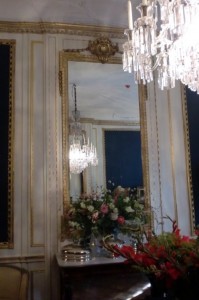
Or the spectacular walls, mirrors and ceilings in the backpart of the Bartolotti house (1755) that is being restaured now to function as a museum and a place to gather.
huis bartolotti amsterdam heritage days  huis bartolotti 2 amsterdam heritage days Ok it was a very very rich guy who built this – he inherited loads of money from an uncle in Italy, this was not for everybody in Amsterdam at that time. He spent the money well, leaving us a heritage that makes people happy. We stood in a long row to enter this place…. but it was worth it. If you visit Amsterdam, keep an eye on this; most problably it will be officially opened as a museum somewhere in 2016.
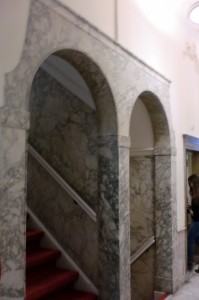
hammerstein advocaten amsterdam heritage days Another spectacular monument is the Hammerstein Lawyers Office in the 17th century ‘Golden Curve’ of the Amsterdam canals. It is difficult to describe the beauty of that place. Imagine it was your office! 17th and 18th century paintings, mirrors, doors and fireplaces… The marble entrance to the stairs is completely original from the 17th century.hammerstein advocaten 2 amsterdam heritage days  hammerstein advocaten 3
Thanks to organisations like the National Musical Instrument Fund, the Hendrick de Keijser association and Hammerstein Lawyers, both tourists and locals could enjoy many hidden treasures in Amsterdam. Amsterdam Heritage Day is a great tradition.

More Heritage in Amsterdam:
Hermitage Amsterdam
Anne Frank House

Banana pancakes and the children of the sticky rice

banana pancakes and the children of the sticky rice Banana pancakes and the children of the sticky rice is a great documentary about two guys, or maybe an entire village in Laos in a period of starting tourism. The place is still ‘all natural’ and the first tourists arriving, mainly backpackers from France, Belgium and the Netherlands, are startled by the purity of the place. The village develops in many aspects and the two guys that are particularly followed in this documentary try to improve their life by offering touristic services. The road they go is so interesting!
The tourists themselves are also quite interesting, some of their conversations are recorded. They have their opinions about life in the village and how it develops and it does not seem to match a lot with the culture and desires of the villagers themselves. Although very sympathic, there was also a note of arrogance in their song.
From the point of view ‘image taking’ the documentary has quite some ‘vague’ moments, maybe nice as a hobby for the filmer but for spectators not always attractive I thought. Fortunately, many good and sharp moments offer enough compensation 😉 So go see this documentary now because usually this kind of movies do not stay long in the cinemas. More info: https://www.facebook.com/laosdocumentary

Other movies with a strong cultural side I wrote about that you might like:
Kedi
Dheepan

Taxi Teheran

taxi teheran  Taxi Teheran

How to make a movie that is only playing in a taxi and does not bore any minute? Taxi Teheran is a succesfull try-out of that concept although not by free choice alone. Jafar Panahi, maker of the movie and also its main character has a history of struggling with censure and oppression in his country Iran. He is not allowed to make movies during 20 years and this movie, Taxi Teheran, was made secretly and smuggled out of the country.
The movie is very funny with many surprising moments, and it has a groundtune of sadness underneath. As such, it is very Iranian: Iranians usually are well developed, social, bright and full of life, they know how to make the best out of difficult circumstances. But that does not mean that they do not feel the difficult circumstances, especially the oppression.
In Taxi Teheran we see a wonderful mix of people entering and leaving Jafar Panahi’s taxi. Even the concept ‘taxi’ in Teheran is different from other countries and that in itself creates unexpected situations. Taxi Teheran shows a lot of interesting interaction between a variety of inhabitants of Teheran. And it gives some great insights in the well developed double face of Iran, in survival and creativity against the odds.

Other movies I wrote blogs about and that you might like:
Banana pancakes and the childres of the sticky rice
Visages villages

A tribute to Charleston victims

tribute to charleston victims

Tomb unknown slave New Orleans Made out of chains

Tribute to Charleston victims

Yesterday we were shocked by the death of 9 black people who were shot for the very reason of being black. This is the kind of tragedy that cannot be put into words – it is the downside of humanity, or should I say inhumanity. We cannot believe that it happened, but it did in Charleston, USA today.

As a tribute to the victims, I re-publish a part of my diary about the international diversity conference in New Orleans 2006 (yes, shortly after hurricane Katrina). May the strength of people who were slaves, who protested against slavery and who protest against the remaining infections of that period, be blessed and reinforced. May their tears be dried by soulmates and friends.

tribute charleston victims

Tomb unknown slave New Orleans

Building by remembering (New Orleans, June 11, 2006)
By coincidence we walked into a church, just because the door was opened. It appeared to be the only door where in the time of slavery, banks were bought by free black people for slaves to sit upon. Outside of the church we find, unique in the USA, the grave of the unknown slave (the photo on top). A place that makes you silent. A sign of resistance, a sign of hope. It confirms the thesis of the Museum of Art, that the future is built by commemorating the past, not by forgetting it. The power to rebuilt a town like New Orleans can be found in that concept. Because it is sure that people will rebuild the town. And the question of the future is for whom they will rebuild the city (black or white).

I remember that we asked who was in the grave of the unknown slave. The answer was: no one in particular. So many slaves died here, they were buried all around so all of the ground in New Orleans is sacred, the church people said. This made me as silent as the Charleston murders did yesterday.

A blog that might interest you: Who tells your history? and other questions
A publication related to this subject (in Dutch): Zoek een filantroop voor Slavernijmuseum

Adana archaeological museum: closed???

adana archeological museum


The Adana archaeological museum is one of the ten oldest museums in Turkey – opened already in 1924, the official government website mentions: www.adanamuze.gov.tr. You don’t need to speak Turkish to understand the unique pieces to be seen in this museum: “Neolitik, Kalkolitik, Bronz, Proto-Hitit, Hitit, Yunan, Roma, Bizans, Selçuk ve Osmanlı devirlerine ait eserlerinin yanı sıra, az miktarda Asur, Fenike ve Ermeni eseri….” But you can find some English information here: Adana_Archaeology_Museum and here, including beautiful pictures: adanaarchaelogical. Unfortunately that is all you will see as they closed this museum completely.
I was in Adana for a trademission with our ambassador and I decided to book a later return ticket the next day, because I really wanted to see this museum. I found myself in front of a locked fence. ‘I will talk myself into it’, I thought. In Turkey, most things are possible if you are kind and you speak Turkish. But the guard at the fence was different: there was no way to see even a glimpse of the beauty in this museum. ‘There were not enough visitors’, he explained and ‘it is my responsibility, I cannot do it’.
In the meantime, I am reading the book Toprak from Buket Uzuner. I bought it at the airport in Istanbul, it was in the Top 10 of Turkish books. In that book a teacher says about the Hitite city of Çorum (page 31, sorry for failures in translation, my fault): “Children, if the Hitites had lived in a western country, I guarantee you, the world’s most important archeologists and historians would work there, all the world’s tourists would stream into the city. If the people of Çorum would become master of their local history, Çorum would already have developed as an international star with trade and book fair, food and tourism festivals on world level. Be sure children that if you want it, the Hitite heritage will attract as much attention as the Egyptian pyramids, an important jewel! (…)”
Need I say more. Heritage, a matter of neglect or a matter of joy and wealth.
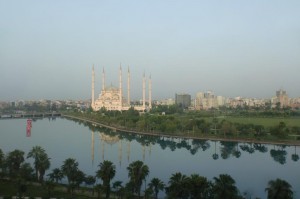
Let’s keep hope that one day the museum will open again. It is not difficult to find, if you see this spectacular new Sabancι mosque, go around the corner and you have arrived.
sabanci mosque

Other archaeological museums in Turkey’s South
Archeaological museum Gaziantep
Medusa Glass Museum

And the Archaeological museum Amman, Jordan

Agios Trias Basilica – Northern Cyprus heritage (13)

Northern Cyprus Heritage - Agios Trias Basilica 0

Agios Trias Basilica

5th/6th century rests of the Agios Trias Basilica are found on the peninsula of the Northern Cypriot Karpaz close to the village of Sipahi which means: in the middle of nowhere. We were the only visitors but there was a most friendly guard who was happy to sell us a ticket for 5 TL, at that moment € 1,90 (it was before the 2015 elections, after which the Turkish lira devaluated). So the entrance price should not stop you from visiting Agios Trias Basilica and moreover the mosaics are very much worth a visit, they are amazing!
Northern Cyprus Heritage - Agios Trias Basilica 1  Northern Cyprus Heritage - Agios Trias Basilica 2  Northern Cyprus Heritage - Agios Trias Basilica 3  Northern Cyprus Heritage - Agios Trias Basilica 4  Northern Cyprus Heritage - Agios Trias Basilica5  Northern Cyprus Heritage - Agios Trias Basilica6
A great article with lots of information about this site can be found here: http://allansartworlds.sites.ucsc.edu/wp-content/uploads/sites/154/2015/03/Langdale-Basilica-of-Agias-Trias.pdf. This article published in 2009 talks about ‘lack of proper maintenance (page 2). Things have only got worse since that time. The unique mosaics lie there completely unprotected and this is not all… (reliable) rumour goes that the mosaics are regularly ‘cleaned’ with a high pressure washer.
In an earlier blog I wrote that the Greeks consider the Turks as barbarians – for the way they deal with their heritage and that sometimes they are proven right in that opinion. This is one of those times, that they are proven right. I thought I’d faint when I heard about the high pressure washer…
Anyway this monument Agios Trias Basilica is still extremely beautiful with its unique mosaics so I’d hardly recommend a visit. Positive thinking: it might be one of the only moments you can actually and freely walk over 5th/6th century mosaics and live the feelings of people who did the same many centuries ago.

Blogs about Mosaic Museums:
Vesunna Museum Périgueux France
Bardo Museum Tunis, Tunisia
Zeugma Museum Gaziantep, Turkey

Green Line Nicosia – Cyprus

green line nicosia saray hotel 4   nicosia green line saray hotel 5
Look at the Green Line Nicosia – Cyprus from above in these pictures and you can easily see 2 cities here: the Turkish one, in front and the Greek one, further away.nicosia green line UN post Nicosia Invisible here, inbetween the two city parts lies the Green Line, a 100 meter large strip where the UN rules since 40 years (!) to separate the Greek Cypriots from the Turkish Cypriots… Easy to understand how bored the UN-soldiers are here, they just ride around in expensive UN-cars as there is nothing else to do. The fighting has stopped long ago and the frontier is even ‘open’ since 2003 at three points at the Green Line Nicosia. Parties make small steps forward that symbolize progress like the abolishment of giving stamps every time a person crosses the transit point; this step was the first result of the new peace negotiations that started 2 weeks ago. It lead to quite some confusion especially at the Turkish side: the protocol had to change but Turkish officials love stamps – clearly that was really a thing to give up for them 🙂 Anyway the international community was investing here at least 30 years in vain, paying for useless UN-presence, boycoting the North / Turkish side without any result. For how long will we continue to do so? And why?
Nnicosia green line greek soil versus turkish sideinicosia green line turkish soil versus greek sidecosia could be a beautiful and flourishing city but it is not because it has no heart but a Green Line, a real wall in the middle of it: see the pictures, where we walk on the Greek side with theTurkish Cypriot and Turkish flags on the old city walls, and the walk on the Turkish side limited by a sudden wall to stop us going to the Greek side: no entrance, no photographs allowed either by the way.
I found the transit point at Ledra Palace the most sad one I have seen so far, although there are several peace seeking initiatives in the buildings there (and also the German Goethe Institut as if nothing happened, very funny). This transit point is at the Greek side surrounded by despair, no investment, no renovation, and even 40 year old remains of fighting (kept there deliberately?):
nicosia green line house at ledra palace  nicosia green line remains of fighting close to ledra palace
Coming from the city of Amsterdam where we love to restore houses and to let original beauty come out at the max, I have to say my hands were itching to take on the job. But well, there is certainly a reason for the non-investment and Nicosia will stay a city without a heart untill the political problems are solved – I hope: soon!

What to do in Nicosia as a tourist? Go to the Museum of the history of Cypriot coinage.

Want to read political stuff? Read about the so-called Freedom Day in Northern Cyprus