Sogmatar: echo of a lost religion

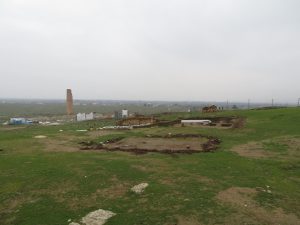
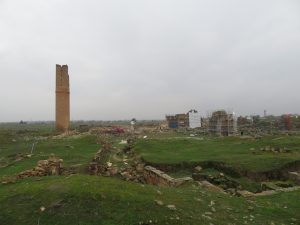
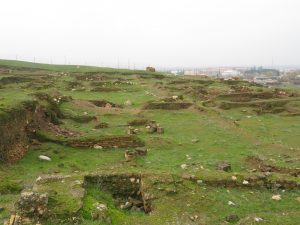
Sogmatar: white hills under an endless sky. At night, the view of the moon and the stars must be spectacular here, at Sogmatar. No doubt that the view is an important reason why humans with a religion following nature chose these hills for their temples: seven temples, each temple on a different hill. Visiting Sogmatar was an amazing experience, uncomparable to anything else.

The first sign of Sogmatar is the cave of Pognan. In the middle of nowhere, unprotected by any protection measure whatsoever, I find old carvings of humans against the walls of this cave. One assumption is that the human figures symbolize the planets, part of the religion of nature practiced here with a central place for the god Sin, the moon and the father of the gods. General knowledge so far relates Sogmatar directly to practices at Harran. Sogmatar could even have been Harran’s open-air temple.

After the cave, the road goes on to the hills. Poor houses are scattered around the place. Children approach to say hello. Do they not go to school? Yes they do, they say. They have a very old teacher and he is not giving lessons this afternoon. But there is a small building that forms the class room.

sogmatar

What should happen to these innocent children in the rather cruel environment of fundamentalists on the one side, and immense technological progress on the other? Can this half abandoned village prepare them for the world outside? I pass a goat, a dog and some garbage, to end up at the foot of a hill. On top of this hill lies the temple of the Sun or the central sacred hill (like in Harran, sources differ here so I can not give you precise information about what hill is what). The way to go up is rather easy, sport shoes would be nice but my boots with high heels do not create problems for the way up (and down).

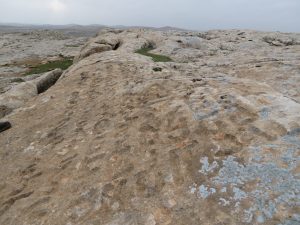
Rock and earth, rock and earth: the higher one climbs the more impressive the view on the area becomes. Within ten minutes I arrive at the top of the hill. In front of me are new carvings made into the rocks of the hill, even better than the ones in the caves. Amazing: on top of this hill, for anyone to see and to visit, out in the open, a man and a woman are patiently looking at the new visitor. Maybe they didn’t see anybody for ages, but it could also be that I am visitor number 2 Million. However, the hills are totally deserted now, except of some villagers.

sogmatar
1 of 7 Sogmatar temple hills
sogmatar
1 of 7 Sogmatar temple hills

What I learned in my visit to Şanlıurfa – former byzantine town of Edessa – is that Syriac was a general language here. I always thought it was a religious language, used by minorities like the Syrian-Orthodox. However here it is found on mosaics, in Harran, and also here in Sogmatar where nothing indicates they ever heard about Christianity. It was in Syriac that astronomers studied their science, based on Syriac translations of old Greek texts of Aristotle and the like. It was in Syriac that they deployed their rituals towards the sun and the moon and the five planets Saturn, Jupiter, Mars, Venus and Mercury, each of them having their own temple on their own hill. From the hill of the temple of sun, all other hills are visible as you can see on the photographs.

sogmatar
another Sogmatar temple hill
sogmatar
another Sogmatar temple hill

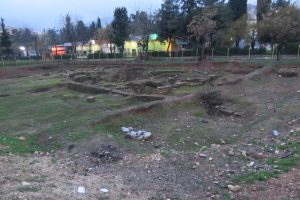
Another hill that is visible on this picture (brown and green) looks like a place where excavations could be successful. I was told that some minor research was done on top of that hill and small stuff like coins were found there. One day, there will be archaeological excavations on this spot. It might be another Göbeklitepe. Let’s hope that whatever is under the surface will be safeguarded for future generations.

sogmatar

I pass the statues carved in the rock wall to go to the very top of the hill. The view is majestic. I imagine that it is night and that the sky shows all planets and stars in its full glory. There might not be a better location in Mesopotamia to watch than here. The builders of these temples either were Sabeans or were related to Sabeanism (see my other blog for uncertainties in sources about that). Holes in the top of the hill show that they had statues there, set upright by putting the smaller basis at the bottom of the statue into the hole. A man made basin indicates the spot where sacrifices were made.

sogmatar

More Syriac inscriptions are found on top of this hill. A translation: “I am Tridates, the son of Arab Governor Adona. I built this altar and pillar for Marelahe on February in 476, for the lives of my master King and his sons, for my father Adonna’s life, for my own life and for the lives of my siblings and my children”. The date of 476 written in the scripture means around 164-165 A.D. according to Seleucid calendar.

sogmatar

Technically speaking, there is ‘not so much to see’ here in Sogmatar. It is also not very old site, maybe 1800 years – not an impressive age in Mesopotamia. But for me, Sogmatar beats all other sites I visited in Şanlıurfa region for a reason I can not completely explain. I think one day I’d like to return and see what it feels like at night. Sogmatar echoes a lost religion of nature that survived much longer than generally known: most probably 800 to 1000 years after the introduction of Christianity and it had some kind of co-existence with Islam. Only the invasion of the Mongols put an end to this era.

sogmatar
sogmatar

On the way back to Şanlıurfa, I pass rock graves. Apparently, people did not just come here for religious and/or scientific practices but they also lived here. Stairs are leading into the rock graves that are empty. I look around, where did these people live? Wherever I look, the fields and hills are deserted except for the few houses close to the temples. The scenery does not reveal its secrets. It is in complete silence that I return to the city of Şanlıurfa – a very conservative-islam city where nothing echoes the lost religion of Sogmatar.

Interesting links, two blogs about Sogmatar:
http://unchartedruins.blogspot.com/2012/08/the-hall-of-records-temple-of-seven.html
http://www.sbresearchgroup.eu/Immagini/ReportfromSogmatar.pdf

To find your way in the region, read Traveling in Şanlıurfa


Mosaic Museum Şanlıurfa

Mosaic Museum Şanlıurfa

Mosaic Museum Şanlıurfa has several mosaic masterpieces that were found at or close to the spot where the museum is located. The mosaics are relatively recent, dating from the 5th and 6th century AD in the time that Şanlıurfa was called Edessa. I liked especially the mosaic of the Amazons, fearlessly hunting ladies.

urfa 19th century villa
19th century Urfa House
urfa roman baths
Haleplibahce Roman Baths


Mosaic Museum Şanlıurfa lies next to the Arkeoloji Müzesi, the archeological museum. On the other side it lies next to an old 19th century Urfa house and beyond that excavations of Roman baths, both on pictures above. On traffic signs pointing to touristic activities this museum complex is simply referred to as ‘Urfa Müzesi’, ignoring other museums because this is thé one – certainly the largest. Tickets for the Mosaic Museum Şanlıurfa also go for the Arkeoloji Müzesi.

Mosaic Museum Şanlıurfa

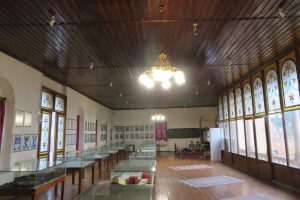
Mosaic Museum Şanlıurfa is a large round building. Paths have been made over and in between mosaics. This makes your visit a pleasant walk. As you can see, I was the only visitor: lots of possibilities to watch in detail. All mosaics found are local, deriving from byzantine Edessa: villas with mosaics were excavated on this spot, called Haleplibahce by locals.

Mosaic Museum Şanlıurfa
Orpheus Mosaic, only/oldest one dating from 194 AD. Once smuggled out of the country and recently given back by Dallas Museum.

Like the Arkeoloji Müzesi, extra room on the floor is left for future findings that will certainly be done. In 2013, new pieces were added to the museum.There were three things I particularly liked. One is that the mosaic stones that reportedly derive from the river Euphrate, are much smaller than in mosaics elsewhere. This turns the mosaics in very fine representations. The best artists must have been at work here!

Mosaic Museum Şanlıurfa

Mosaic Museum Şanlıurfa

Two is the mosaic of the Amazons, the warrior women from ancient myths that are depicted here while fighting with predators like the lion on the picture. This mosaic was discovered quite recently, in 2007. On the wall the museum shows the mosaic as it must have been when it was complete. A great piece!

Mosaic Museum Şanlıurfa

Three is the ‘zebra whisperer’: the representation of a servant with a zebra. I found that strikingly beautiful and unique in its kind.

To finish, a mosaic with syriac inscriptions, particular for this region only:

Mosaic Museum Şanlıurfa
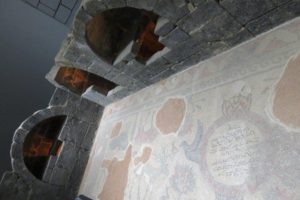
Mosaic with Syriac inscriptions, general language in byzantine Edessa

Follow this link for more info about the mosaics of this museum (in Turkish)

Read here about Mosaic Museum Bardo in Tunis

And here about mosaics of Agias Trias Basilica in Cyprus and Villa del Casale in Sicily

Archaeological Museum Şanlıurfa

archaeological museum Şanlıurfa

Archaeological Museum Şanlıurfa is unique, as it contains the artefacts found in Göbeklitepe, the oldest temple complex ever found (for example way older than the pyramids in Egypt). It is a very rich museum simply because the region is so rich in archaeological findings. All objects shown are ‘local’ and absolutely unique. Moreover, good efforts were made to make historical moments come alive for the visitor. Signs are both in Turkish and English and they offer excellent information.

archaeological museum Şanlıurfa

Archaeological Museum Şanlıurfa in its actual form is brand new (opened in 2015). The museum is large and its space gives a relaxed feeling to visitors. It is almost as if they left lots of space for new objects to come, which will certainly be the case. Unfortunately in this region, several dams were built covering the world’s oldest sites in water (Atatürk Dam, Birecik Dam, Kargamış Dam). There is a clear conflict of interest between conservation of archaeological areas and modern development issues – in that conflict, under actual Turkish politics modern development comes out as the winner. ‘Rescue excavations’ have been made regularly, often under supervision of the Archaeological Museum Şanlıurfa. Artefacts and other findings that could be ‘rescued’ are shown in this museum. All the rest is gone now, maybe to reappear one day from under the water, maybe lost for good.

archaeological museum Şanlıurfa

A ticket for the Archaeological Museum
Şanlıurfa also gives entrance to the Mosaic Museum next to it and vice versa. Anyway you won’t avoid these museums for the price (only € 2,- when I visited December 2018). I will show you some highlights here about things I liked; be aware there is a lot more to see! A visit absolutely recommended…

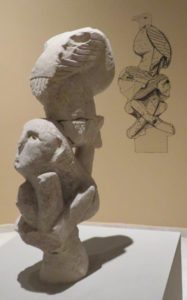
The oldest statue in the world, found in Urfa center. I thought I saw the oldest statue in Amman Archaeological Museum but this one is older indeed. The figure has a clear expression, maybe because of the black obsidian eyes. At the bottom, it is smaller; most probably the was put into a hole in for example the rocks (like in Sogmatar) to stand upright.

archaeological museum Şanlıurfa

A unique, astonishing picture of a woman giving birth, 10.000 years ago. It was found in Göbeklitepe. Other findings and the temple exposition of that site are mentioned in my blog about Göbeklitepe, a reason in itself to visit this museum.

archaeological museum Şanlıurfa

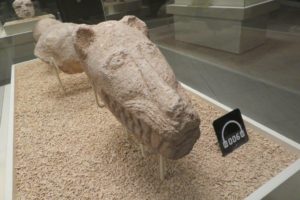
Statues that mix human heads and animals, found in Nevali Ҫori, one of the sites now lost in the water. I found it astonishing that 10.000 years ago, humans were able to make statues like this.

archaeological museum Şanlıurfa

Clay nails to form mosaic pictures. You see here the nails, and an example of how pictures were made by putting them in the wall.

archaeological museum Şanlıurfa

They could be painted in different colors after that, too. They are from the Uruk culture, 4th milennium BC.

archaeological museum Şanlıurfa

Pottery from the Bronze Age, depicting a gate / tower. I saw this after my visit to Harran and I stood there in surprise: doesn’t this pottery resemble the Aleppo Gate I went through? I told myself the gate in Harran is more recent in age but still….

archaeological museum Şanlıurfa

Lovely Bronze Age terracotta. Nice animals, and a stamp seal.

Never saw such a stamp seal before. The museum has different types.

Statue with Syriac inscriptions, Roman age. Syriac was the common language during a long time in Şanlıurfa, called Edessa in biblical and Byzantine times. The inscription says: “This sculpture is Şamașyahb’s son Lișammaș. His brother, Barnay, made it for him. Who destroys this, will be punished by [the god] Sin”.

Göbeklitepe: zero point in time

göbeklitepe

The oldest temple complex ever discovered in the world so far is Göbeklitepe in the hills of Mesopotamia. Findings date from 12.000 – 9.500 BC. Who’d ever guessed that mankind already had this type of constructions thousands of years before the pyramids of Egypt were built? That is why Göbeklitepe is called ‘zero point in time’.
Visiting Göbeklitepe was on top of my list when I traveled to Șanliurfa, south of Turkey. There is so much to discover here! A big part of the research field has not been unearthed yet. Archaeological work will extend until 20 to 30 years from now, at least. Every inch of this field contains neolitic artefacts.

göbeklitepe

It was well-prepared that I arrived in Göbeklitepe. I read everything, I had seen many photographs. The only surprise was the weather. I travelled 6000 kilometers to find myself in terrible storm-like weather circumstances. The locals were shivering even more than I was. They stayed inside, protected from an icecold wind that brought horizontal gusts of rain soaking you whatever clothing you’d wear. What to do?

göbeklitepe

I went to the building down the hill, next to the parking place. An extra ticket of five lira gave access to a room with an audiovisual representation. Some kind of vague movie about neolitic times was shown: images ran over the walls and floor, while loud music rolled over the only spectator present. It was a dazzling experience and certainly not the most interesting part of the visit. But well, once you traveled 6000 kilometers you want to see everything to prevent missing out.

göbeklitepe

I left the building and stepped into the small bus, sponsored by the Dogus Group. Nothing about the weather had changed, so I accepted my fate. After a one, two kilometer ride to the top of the hill, the bus stopped. I saw a small museum shop but it was closed. All I could do was walk to the temples of Göbeklitepe through heavy wind and rain, so I did and arrived at a spectacular spot.

göbeklitepe

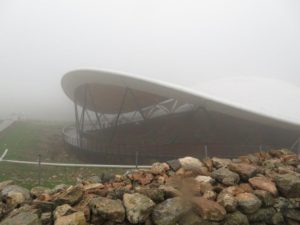
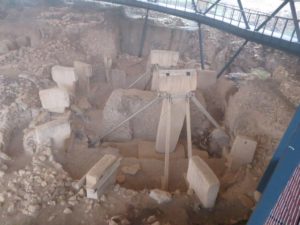
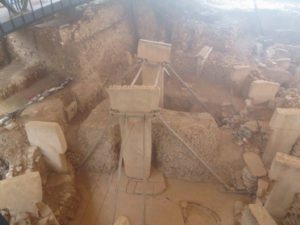
Fortunately there was a roof that stopped at least most of the rain. But the photographs I made are rather misty as the wind blew the clouds over the temples anyway. Four temples lay in front of me and it was most impressive. Especially the age, from 9.600 to 12.000 BC is unimaginable. How did neolithic humans make five meter high stèles to stand upright? Two stèles in the middle, twelve stones surrounding them.

göbeklitepe

Later, I visited the Șanliurfa Arkeoloji Müzesi where they rebuilt the largest temple found. They made it so that you can walk into the temple, an impression that makes you silent. On Göbeklitepe you look at the remains of the real temple, from above. In the museum, you experience what neolithic people have experienced when they entered the site. If you decide to make your way to Șanliurfa, I recommend that you visit both sites because it will make your experience complete.

göbeklitepe

Many animal carvations are seen on the stones, like a fox, birds, snakes. The neolithic era is considered as the time when mankind went from a hunting and nomad existence to a residential and agricultural existence. One theory says Göbeklitepe was not about religion but about domesticizing animals: people were trying to find out which animals could or couldn’t be domesticized, and that was the purpose of these buildings and the animal carvings in the rocks. It is a theory that does not explain the specific placement and number of the stones. However, we know nothing about eventual religious practices in that era so calling Göbeklitepe ‘temples’ is an uncertain theory as well. We just do not know.

göbeklitepe


An interesting stone is also this one. You see two versions: one is the on-site version and the other is the museum version that is a copy but clearer because there was no mist when I took the photograph 😊.

The idea is that the round ball is a head and – like other natural human burial/after death traditions – that the head of dead people was given to birds to be ‘cleaned’. Think of the way Persian Zoroasters dealt with dead bodies.

göbeklitepe

I loved walking around the Göbeklitepe temples, even though I almost froze. A class with school kids visited as well. Some were super concentrated when a guide explained them where they had arrived, others felt clearly miserable… The teachers looked so motivated, it was great to see. I saw groups of schoolchildren with enthusiast teachers almost on every location of heritage in Șanliurfa – so good that they invest in that! Of course a bit of nice weather helps to get the message across to the kids…

On the way back to the bus, I passed some other excavated carved stèles that apparently could not be protected yet. They were packed in wood against weather circumstances, not a superfluous measure.

göbeklitepe

I also saw new excavation sites, one uncovered – you can see how they divide the area in helpful squares – one covered by a large roof:

göbeklitepe

I hope that roof allows them to continue the work because in the weather circumstances I passed through, that would be impossible.

Last but not least, I like to show you some pictures of animal statues found at Göbeklitepe and exposed in the Șanliurfa Arkeoloji Müzesi. How wonderful that in a very early era, these statues were already made by humans. For me, the most attractive point of Göbeklitepe was the continuous awareness that this site and all its artefacts form a zero point in time!

göbeklitepe
göbeklitepe
göbeklitepe

You may also like: Archaeological Museum Gaziantep: ‘just’ local stuff

Harran: nonsense with traces of the real past (2)

Harran: nonsense with traces of the real past

Harran: nonsense with traces from the real past…
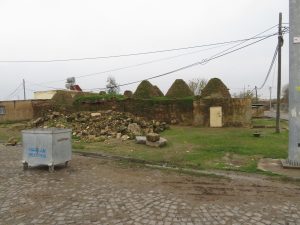
From the mound of Harran, many characteristic beehive houses can be seen as well as the castle of Harran. They lie in complete peace. Nothing seems to happen here. Farther away, over the border with Syria, smoke clouds rise from the fields. Is somebody making a fire? Or is that because of the war in Northern Syria?
I decide to follow the path from the mound of Harran down to the beehive houses and the castle of Harran.

Harran: nonsense with traces of the real past

While making a short tour of the quarter, I walk into a group of young men. One of them wears a most trendy hoody from Amsterdam. ‘Hey’, I ask him, ‘are you from Amsterdam?’ He is not, he is from Harran, but he already went eleven times to Amsterdam. He loves it. Another guy comes forward out of the group. ‘I am a tourist guide. I will show you around’, he announces. He sends the other young men away with the words: ‘I have to work now’. So I found myself a guide or better to say: the guide found me.

Harran: nonsense with traces of the real past

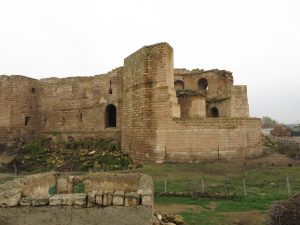
Together we walk around the castle. Entering the castle is not possible because it needs to be restored. It happens that stones fall down so tourists are no longer allowed inside. Or is this the usual ‘it is dangerous’ argument? The castle appears to be a crusader-construction but my new guide tells that it is much older. Even Abraham and his wife Sara had or made a room in the castle and influenced the building of extra parts. I find that remarkable as Abraham was a nomad and lived in tents. To be honest, I think I am told quite some humbug. Harran: nonsense with traces of the real past in it… Certainly the castle is built on a place that was used before: it has a very old history and indeed maybe Abraham and Sara’s footsteps left some prints there.

Harran: nonsense with traces of the real past

Again, like in my first blog about Harran, it is difficult to find information that confirms different versions about the making of the castle. Some sources say the castle was made by Byzantines and strengthened by Crusaders; others say it was built by Fatimids in the 11th and Saladin in the 12th century.

Harran: nonsense with traces of the real past

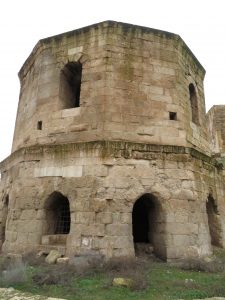
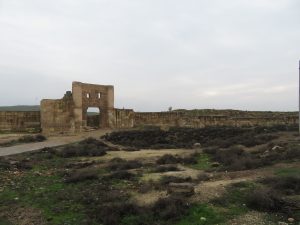
It seems that in the 8th century, when Marwan II turned the temple of Sin at the Harran university into a mosque, he permitted the Sabeans to create a new temple at the location of the actual castle: apparently the castle was built on the rests of the temple. The octogenal tower in that scenario derives from the previous temple of Sin. Surely the castle is a spot where interesting archaeological research remains to be done.

Harran: nonsense with traces of the real past


After the visit of the castle, we walk to the tourist house that allows visitors to see the beehive-structure from the inside. Beehive houses are all around in this area and specific for Harran. The special shape of the roof makes the house cool in the hot summers of Harran and warm in the cold winters.

Harran: nonsense with traces of the real past

All kind of local products can be bought at the tourist house. I drink a tea with my guide and hear about other possibilities to enjoy the region. Every spot is history here, there is no doubt about it. Do not believe everything that is told about it, and remember there is nevertheless some truth in these stories. Harran: nonsense with traces of the real past…

You may also like the blog about the open air temples of Sogmatar, a site not far from Harran and related to it’s religious practices.

To find your way in the region, read info and tips about Traveling in Şanlıurfa

Harran: nothing to see!? (1)

harran

In the middle of the wide, flat plain 40 kilometers south of Şanlıurfa lies Harran. It is confirmed that this Harran is indeed the place where Abraham went when God told him to leave Ur of the Chaldees, as the bible book Genesis tells us. Therefor I had to go there and experience it! Moreover, Harran has ruins of a medieval islamic university: a period when Islam prospered in combination with science. People warned me ‘there is nothing left to see’ but I love places without anything to see. So I found myself in fields where nomads seem to live the way Abraham did as a nomad 4000 years ago, overlooking empty plains far into Syria.

Harran Aleppo gate

The dolmuș that brings you from Urfa to Harran stops where the four kilometer long city walls of ancient Harran begin. Some parts of the walls have recently been restaured, more restauration projects will follow. The walls are impressive. I passed the gate of Aleppo, the only gate that remained from the originally six gates (opening the road to Anatolia, Arslanli, Mosul, Baghdad, and Raqqa). In front of me lay a long road going over a hill. Far away on the left, the shade of a tower that could be the spectacular leftover of the medieval university, renowned and successful for hundreds of years.

harran

Up the hill were active excavations in what is called the ‘mound of Harran’. It has a 9000 year old history and thousands of artefacts were already found. Spectacular are the Stèlès from the 6th century BC that are exposed in the Archaeological Museum of Şanlıurfa; look at the pictures and imagine them here in this spot, overlooking the plains.

6th century BC steles found in mound of Harran, exposed in Arkeoloji Müzesi Șanliurfa
tumulus

Today’s Harran is a small provincial city but it had a central place in early history during thousands of years. Akkadians, Babylonians, Assyrians, Hittites, Persians, Macedonians, Romans, Byzantines, Seljuks, Ayyubids, Ummayads: Harran was a mighty town for many different powers, until it was destroyed by the Mongols in the 13th century.

harran tumulus

It never recovered from that and did not regain its central position in the middle-eastern history.
Harran is only 15 kms away from Syria and some actual (December 2018) hotspots in the Syrian war. But Harran is totally quiet. People here fear more an inner war in Şanlıurfa region than a possible attack from Syrian groups to Turkey (‘they do not dare that because we will fight and die for our country’). Read more about these tensions in this blog.

harran

It is true there is not so much ‘to see’ here but the visitor walks over grounds of 9000 years of civilisation and that is a great experience in itself! Moreover the idea that Abraham was here, and his father Thera, his wife Sara and other members of his family. It is an experience not to be missed and a feel of ancient times that brings history closer to understanding.

harran

I followed the path and came to the site of Harran university. It was closed for restauration purposes but I could still have a good impression of the enormity of the complex. Although this university is usually presented as an islamic achieval, it was already active as a study center during many centuries before the arrival of islam.

harran

Harran was originally the core centre of the worship of Sin, with a central place for the god moon and practices in following the sun, moon and planets. Sciences like astronomy were well developed and early Greek works like Aristotle had been translated to Syriac, local language. These efforts opened the Greek world to Arabs later on and it made the rule of the Abbasids flourish, a period called the islamic golden age.

harran tower

Under pressure of the Ummayid caliph Marwan II in 744 the local pagan scientists called themselves Sabeans as this was a religion accepted by islam. Thus they escaped accusations of paganism and possible penalties like exile and hanging. Sabeanism seem to have had the worship of Sin but that was also the religion originally practiced in Harran. Stories are contradictory here, I could not find out what was the difference between the old practicesin Harran and the Sabean practices accepted under islam pressure. Some say it was about cruel blood offers of young people that had to be abolished under islam, but I could not find formal sources for that. The same goes for the story that Sabeans had adopted a ‘book’ – the Corpus Hermeticum – to be accepted by islam.

harran ruins

Most probably the Sabeans are related to the Mandaeans, a now Iraqi minority that lives in the marshes between the Euphrate and Tigris – they might even be descendants of Sabeans who had to flee when islamic religious pressure became too strong to uphold their own religious practices. Today Sabeanism a ‘religion of nature’ that survives in Turkey, though very much underground, waiting for better days to come.

harran

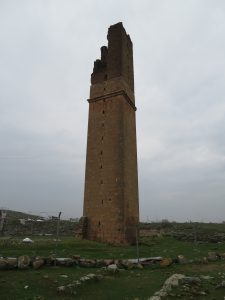
I was surprised to discover that.12th century traveller Ibn Jubayr places the location of the temple of Sin originally on the spot of the university. The tower that in modern literature is described as an islamic built minaret belonging to the mosque built here in the 7th century, is the only left over of that temple. Turkish sources deny that but it is probably true. Anyway ‘stories’ seem to flourish more in Harran than well researched facts. I found Harran a place where there is still a clash of different ideas, although rather hidden than outspoken. The people who warned me ‘there is nothing left to see’ were right and still I am very happy I went there – Harran in all its desertion influenced my perspective as much as Urfa did.

harran dolmus stop

How to go to Harran
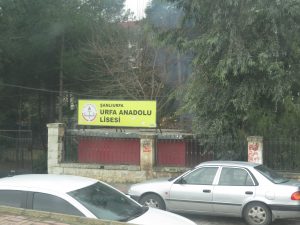
I had a lot of trouble finding out how to get in Harran without taxi so I explain it for you here if you like to go. There is a dolmuș going to and from Harran every 15 minutes until 17.30. In Şanlıurfa it starts in the new Otogar that lies outside the center (1 hour walk but there are city-busses and dolmuș-busses on that road). Upstairs are the intercity busses, downstairs the dolmuș-busses like the one to Harran. You can also go to the Nevali Hotel, a high building visible from far away. Follow the (car) road sign to Harran, just 50 meters and that is a spot where the dolmuș stops, right in front of the ‘Urfa Anadolu Lisesi’ sign on the picture above. There is no bus-stop sign but if you lift your hand when you see it coming, it stops anyway. It takes about 1,5 hours to go (as the driver looks for passengers) and 1 hour to return. In Harran, it drops you off at walking distance from the antiquities.

Read also part 2: Harran: nonsense with traces of the real past


Graves near Abraham’s cave

graves near Abraham's cave
“my misery was not finished but my life was”

Graves near Abraham’s cave
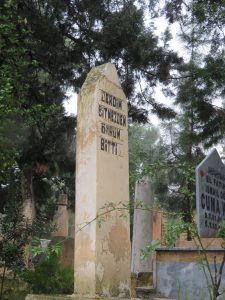
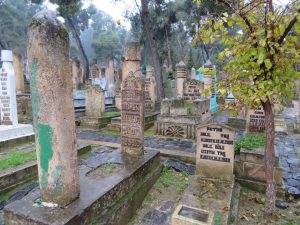
‘You can’t go there, it is dangerous’, the man told me while I was walking on a beautiful path amid hundreds of graves. I had come half way the graveyard, enjoying the tranquility and reading the names and comments on the stones. ‘Really’, the man said and he pointed towards one of the exit porches, ‘you are walking here alone and furtheron it is dangerous with drugusers and the like. I can not let you continue, you understand that’. He looked at me in the genuine hope that I would understand indeed.

Graves near Abraham’s cave

Political correctness exists in many countries, also in Turkey. Here in conservative Şanlıurfa, they find it difficult that a woman wanders all by herself without a clear and useful purpose such as doing shopping, and even then she is usually not alone. Women are not present when their beloved ones are buried; in the best case, they watch from a distance while the men do the ceremony. And here I am, crossing all the lines by walking freely over the graveyard, uncontrolled by a man, undefined by any purpose.

Graves near Abraham’s cave

Political correctness means that the man does not tell me directly to go away because I am a woman, alone. He is aware of western values and my possible ignorance about the middle-eastern ones. Therefor he tries to convince me on the grounds that are always used everywhere in Turkey in cases like these: he tells me that it would be dangerous not to listen to him. I give it a small try, by showing a shocked face when he mentions drug users on this rainy Monday morning ‘oh, do you not have police officers to come and do something about it?’ ‘Yes, of course, they will be here when there is an incident’, is the answer I get, ‘please Madam, follow me’. I decide to give up, it is not that important anyway, and follow him on the way out.

Graves near Abraham’s cave

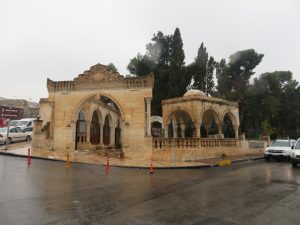
I was on my way to Abraham’s cave when I saw the immense graveyard and decided to have a look. Is it a coincidence to find so many graves here? I don’t think so. All these people have found a last place to rest in the very neighbourhood of the holiest place in this region. The very very lucky ones have conquered one of the rare spots next to Abraham’s cave and the Mevlid-i Hilal mosque, see the picture on the right. It was taken from the road to the castle (Kale) that looks down on the Dergah Complex. In many places, like Rome and Jerusalem, people get buried close to holy places (Saint Peter’s church, Mountain of Olives) to be the first one to witness on the last day, on Judgement Day. I do not know what is the thought of being buried in graves near to Abraham’s cave: there will be no resurrection of a holy person there because Abraham was buried in Hebron, not in Şanlıurfa, and it is not the spot where a prophet will reveal himself on Judgement Day. There must be a thought that I missed (feel free to comment below if you know how this works).

Graves near Abraham’s cave

Another interesting story here is the grave of Bediüzzaman Said Nursî. If you are in the court that gives direct access to Abraham’s cave, look opposite to the entrance to find a special chamber for Bediüzzaman Said Nursî. He is presented as a Muslim scholar and commentator of the Quran and the author of the Risale-i Nur collection. In Western Europe he is known as the founder of the so-called Nurcu movement.

Graves near Abraham’s cave

A sign mentions that he always longed for Şanlıurfa and asked to be brought there when he felt death coming. Thus he spent his last three days in Urfa lying in a hotelbed, surrounded by praying students ‘from all the corners of the country’, then he blew out his last breath on March 23 1960. They buried him in front of Abraham’s cave. But a few months after the military coup of May 1960, officials dug up his body and transported it to another place, unknown until today. So what you look at in the chamber is an empty grave. The fight between secularism and fundamental islam is older than just the 21st century…
You may also like these blogs:
Graveyards as symbol of ethnic conflict
Graveyards: Northern Cyprus heritage

Balıklıgöl – the sacred fish pond

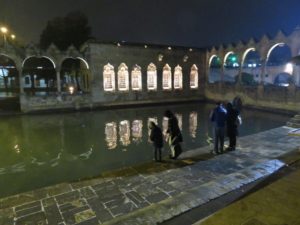
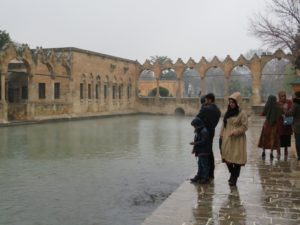
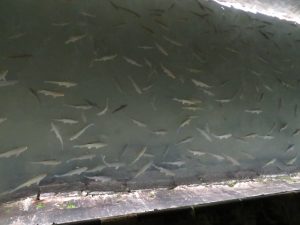
Balıklıgöl in Şanlıurfa is like a place deriving from the stories of 1001 night… or like one of the best places we have in the Netherlands, the Efteling. Balıklıgöl means fish pond and it contains more carps than you have seen or will ever see again in your life. Equally interesting is the story of the sacred fish pond’s origin. Balıklıgöl is not just very beautiful, it is also very holy part of the Dergah Komplex around Abraham’s cave of birth.

Balıklıgöl – the sacred fish pond

Once upon a time there was the cruel King Nimrod and the first monotheist in ancient times Abraham. King Nimrod had not succeeded to kill Abraham as a baby because his mother had given birth in a cave and hidden her child there during many years. So now King Nimrod, a worshipper of idle gods, had to cope with Abraham who resisted against existing religious practices. There is only one God, Abraham claimed and indeed he was pushing to have his point taken. King Nimrod got very annoyed with that man and decided to throw him into the fire to get rid of him once and for all. But Abraham had God on his side! God changed the fire into water for Abraham to make a soft landing and God changed the pieces of wood into carps. This is how Balıklıgöl – the sacred fish pond was created and Abraham survived to fulfill his precious work of the introduction of monotheism. Rumors say by the way that this is a story with roots in Jewish scriptures rather than Islamic scriptures but conservative Şanlıurfa is not the best place to discuss this sensitive type of rumors so I didn’t. Feel free to comment below if you have good knowledge about this, though.

Today Balıklıgöl is a favorite place to go for people of all ages. They feed the carps who will show up with hundreds – no exaggeration! – and squirm up, over, under each other to pick up the food thrown in the water. You can buy special food for 1 lira from sellers in boots next to the pond. And always remember this is a holy pond: if you try to eat one of the carps, you will become blind.

Balıklıgöl – the sacred fish pond

Balıklıgöl – the sacred fish pond

On the west side of the pond is the Halilur Rahman Mosque, another mosque that was built on a former church, a fact supposed to symbolize perceived holiness since many ages. The Halilur Rahman Mosque dates from early 13th century but the minaret, squarish in shape, is said to date originally from the church. I did not see the inside because it was closed for restauration purposes when I visited (Dec.2018). 

Balıklıgöl – the sacred fish pond

On the north side is the 18th century Rızvaniye Vakfı Mosque and Medrese complex, open to all visitors. 

Balıklıgöl – the sacred fish pond

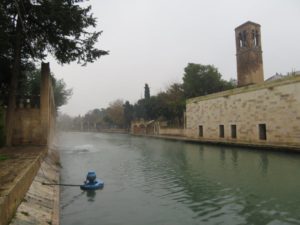
On the south side is a great parc with trees, very green grass to my surprise (because of exceptional rainfall), restaurants and several canals used to bring up the young carps as you can see in the picture below: the young ones are also countless…

Balıklıgöl – the sacred fish pond

The parc ends where the rocks of the castle, the Kale, begin. To the east is Abraham’s cave of birth and the Mevlid-i Halil Mosque and beyond that the grand bazaar. But I’d say that the Balıklıgöl is worth a visit just by itself. It is wonderful to see both in daytime and in the evening!

Mevlid-i Halil Mosque: do as you like…

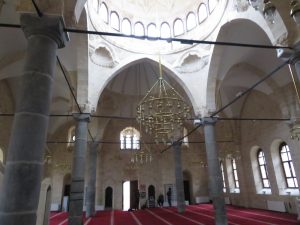
Mevlid-i Halil Mosque was built in the 19thcentury next to Abraham’s cave in Șanliurfa, Turkey’s South. Therefore it is a well frequented mosque. Especially in the period before the hadj to Mecca starts, many believers gather in this mosque to be blessed before their journey. 

Mevlid-i Halil Mosque inside

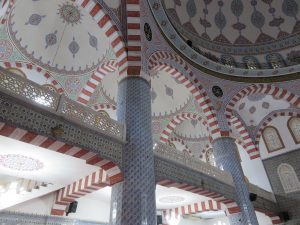
The Mevlid-i Halil Mosque is beautiful and peaceful. The grace and harmony that one feels already upon entering the courtyard welcomes the visitor who goes into the mosque. Rules like dresscode are strict in this holy place but that included the mosque is open for women who want to have a look around (‘yes of course, please come in and do as you like’). Most people do as they like, by the way. Men were hanging around, sitting against the wall talking or studying Quran. One man walked around to put some stuff from a stick to everybody’s hand – I got some too, no clue what it was or what it should bring, please comment on this blog if you do! – then he lay down somewhere in the middle of the floor to sleep. One guy asked him some questions but when the man didn’t respond clearly, he left him to do what he liked. Some men came in hastily, in modern suits, doing their prayers and leaving after that. The elderly were often dressed as classic Kurds, with shalvar and headscarfs or smaller caps or even a turban and seemed to pass a part of their social life in the mosque.

Mevlid-i Halil Mosque inside
Mevlid-i Halil Mosque dome

Look at the dome, the windows, the magnificent crystalline in the middle and the different stories with their arches: this visit will leave you with a great impression of fine art and passion to offer the best and if you are a believer, certainly even more. If you want to know the names of the makers of Mevlid-i Halil Mosque, read this Turkish blog.
This blog says one other interesting thing. It seems to prove the holiness of the spot next to Abraham’s cave by telling that it had always been a religious place there: a mosque dating from the 16th century before the actual mosque, before that a Byzantine church, and before that a church dating from 150AD. That church was built on the rests of a synagogue and the synagogue was based on a pagan temple. Well that’s history!

Mevlid-i Halil Mosque

Of course this place as Abraham’s cave is not uncontested: archaeologists in the 19th century have marked a place in Iraq 600 miles away as the real Ur of Chaldees. Others say there is no mention of the place where Abraham was born whatsoever in holy scriptures. And again others say there is no proof at all that Abraham was a real and living creature instead of a myth so that would leave us without any place of birth… Now Abraham’s cave is so holy because Abraham is considered as the man who fought idolatry and introduced monotheism. So why would pagans have built a temple next to his cave? Would they not have hated Abraham rather than loved him? The ‘proof’ introduced in that blog lacks a bit of logic… but if there was indeed a synagogue here and a very early church, that is more convincing than 19th century theories of guessing archaeologists (see this blog for extensive and detailed comments).

Mevlid-i Halil Mosque

Anyway you do not need to know the exact truth to enjoy your visit of Mevlid-i Halil Mosque. Go in the evening as well as in daytime for different impressions and bring back your own stories!

You may also like the blog about the many graves near Abraham’s cave or the blogs about Harran where Abraham went when he left Ur of the Chaldees.

Abraham’s cave of birth

Abraham's cave

Abraham’s cave in Șanliurfa is considered as the place where Abraham was born. His mother gave birth to him and hid him during ten years as King Nimrod had ordered to kill all newborn children when he heard about Abraham’s appearance (and yes this looks like another famous biblical story). Abraham’s cave is an impressive religious place ot visit.

Abraham’s cave is surrounded by a large parc with a pond and several mosques. However the cave itself is quite small. You enter it while bowing under a low doorpost, after passing a room with some 12th century religious objects, most probably belonging to the Selҫuk period, and then you find yourself in a kind of open space with carpets to sit on and pray. The core part of the cave is protected by glass: you can have a look in it but not enter it. 

As it had been raining for a while when I visited, an exceptional event in ever-dry Șanliurfa, the cave was full of water and the glass quite wet – this is why the picture is unclear. Most probably there are several measures to be taken on the background to prevent that the water rises too much, making visits impossible.

Abraham's cave guarded by a man in the evening

Oh and by the way, my comments are made from a female perspective only. Women enter through the left side where the guard is a woman in daytime and a man when it is getting dark (a fact I understood for practical reasons in a conservative city like Șanliurfa but not for religious reasons). As for the male side, you have to go there yourself to know what it is like…
Visitors to Abraham’s cave were few when I came in on a rainy December-day. The silence gave every possibility to let the holiness of the place sink in.

Abraham's cave by night

Abraham is worshipped here for introducing monotheism in the world 4000 years ago, when idolatry was the norm. Don’t confuse this with the respect Arabs pay him for being their ancestor: for Turcs he isn’t. This is about the holy introduction of one God, one book, one truth to mankind, about saving mankind from a loveless, ignorant and barbaric empty life.


A popular story they love here is about Abraham destroying a bunch of statues that symbolized idol gods. When people find out about the statues, they soon know where to search: this must be the work of that rebellious Abraham! They go and find him and bring him to the statues: ‘look what you’ve done’, they shout at him. But Abraham denies it: ‘I did not do that, that guy did’, pointing at one of the statues that is undamaged. The people protest, ‘what a fool you are, how could that statue do something, it can do nothing at all’, they snare at Abraham. Abraham shrugs his shoulders, because that is exactly what he had been telling them for a while already. ‘Well, if it can’t do anything, why do you worship it?’ Thus he made his point and introduced monotheism step by step, until it was there to stay. 

You may also like the blogs about Harran, a city where Abraham and his family spent quite some time: Harran: nothing to see?! and Harran: nonsense with traces of the real past

Archaeological Museum Haarlem

archaeological museum haarlemArchaeological Museum Haarlem

This guy lived in the 14th century in Haarlem. The way he looks is estimated as 95% accurate. His bones were found in excavations at the Botermarkt in Haarlem; most probably the graveyard of a former hospital. From his bones it was clear that he suffered from severe diseases like infections and disorders of joints caused by hard labour. The idea is that he died in that hospital, only 34 years old. He was larger than I’d thought: 1 meter 84 which was the normal size for people in that period. A woman working with the police worked on the basis of his bones to bring him ‘back to life’, for us living in the 21st century to identify with and see who made all the things that we find in excavations.

Archaeological Museum Haarlem is a great museumarchaeological museum haarlem. I got all this information from a volunteer who started explaining stuff to me without asking, calmly and politely and very knowledgeable. Thanks to volunteers the Archaeological Museum Haarlem can open five times a week. It is not very big: the size of one room. Both history story lines and the objects are very well presented. Creative methods are used to get stories across and it is very child-friendly. History is in Dutch only – object names are also in English. I am sure a volunteer will be helpful for English speaking visitors. I show here some objects I particularly liked, but there are many more special pieces:

Flintstone arrowheads:
Life in the western part of the Netherlands is older than you maybe thought. There was no stable soil but findings witness that this did not prevent humans from living, chasing, working there.


Decorative pins:
The man on the horse is estimated 1500 AD, the round one 1575 -1600 AD. Very beautiful pieces made by real craftsmen.


Two jugs:
One is a traditional beardman jug that I saw a lot in museums. The jug with the pointed nose however (1425-1600 AD) is more rare I guess – or maybe I just never saw it. Apparently this type of jug is the beardman jugs’ predecessor. A very fine piece!


Ladies’ jug:
I absolutely adored this 14th century jug with the ladies depicted in them.


Container to collect dripping fat:
I found this one real fun, such a practical invention. It was catching the fat from the roast above the fire. It has a gutter on the right side to cast the fat in a smaller pan and can be hung to the wall through the eye on the right upper side. Someone thought about this before designing it…

Battle for Haarlem:
Not only the museum offers loads of superinteresting info about the battle for Haarlem (against the Spanish, 1572-1573), including the famous lady Kenau Hasselaer – a strong business woman as well as the fighter she is merely known for. They also show it in pictures and a model of the city walls.


Children’s book about 16th century Haarlem:
This idea deserves a price! The objects shown in one of the showcases are also depicted in the book – an excellent integrated approach to make history come alive. Great applause!!!


Archaeological Museum Haarlem is small, compared to similar musea in the Middle East but it is special and worth your visit.

Other blogs about archaeological museums you might like:
* Archaeological Museum Amman: caring for 6500 year old child
* Archaeological Museum Gaziantep: ‘just local stuff’
* Stockholm National Historical Museum
* Musée de l’Art et de l’Archéologie du Périgord


Vesunna Museum in Périgueux

Such a fabulous museum, the Vesunna Gallo-Roman Museum in Périgueux! A complete villa (‘domus’) has been covered and integrated into a museum together with many very interesting Gallo-Roman objects found – and with a surrounding parc that shows the beautiful and quite well preserved Vesunna Tower. To do so was not just an ambitious idea, it has effectively been realized in an impressive way.
Vesunna or Vésone was a celtic (gallic) goddess that gave her name to the capital of the home of the Petrocorii, the ancient Gallo-Roman inhabitants of the actual Périgord region (in French: from Petricores to Périgordin). The first remains of Vesunna were uncovered in the ’60s already and it was step by step developed into the actual shape of the Vesunna Museum and its surroundings. Visiting it is an amazing experience. If you visit the Dordogne region, don’t miss out on this one. The price is 9 euro only for a combined ticket of both the Musée d’Art et Archaeology and the Vesunna Museum; and for a family ticket, 20 euro.

It was not my best day in taking photographs, alas. But I have a few objects here to show from the Vesunna Museum Périgueux that I liked most:


A taurobolic altar from the 2nd/3rd century. It remembers the sacrifice of a taurus to the mother of the gods Cybele. The four sides of the altar show the symbols and the accessories of the cult.


A figurine of the mother goddess who is breastfeeding two children. It was made in white terracotta. Copies of it can be bought in the museum shop.


A bit difficult to see on this picture but this is a
bronze balance weight with the head of Bacchus.
Very beautiful!


Interesting websites:
1. The Vesunna Museum in Périgueux itself has a wonderful website:  http://www.perigueux-vesunna.fr/
2. Also useful: https://en.wikipedia.org/wiki/Vesunna_Gallo-Roman_Museum
3. And this one about the Vesunna tower and practical info.

Other interesting blogs about archeology:
Archaeological Museum Amman: caring for 6500 year old child…
Who tells your history? And other questions in Stockholm
Archaeological Museum Gaziantep: ‘just’ local stuff