Diversiteit in Marokko en Tunesië

diversiteit inclusie marokko tunesie  Mijn ontdekkingstocht naar diversiteit & inclusie in Arabische landen gaat verder, ditmaal via diversiteit in Marokko en Tunesië. Na de start in Jordanië (Jordanië blog 2 en Jordanië blog 1) ging ik aan de slag in Tunesië en Marokko met buitengewoon spannend verlopen trainingen. Niet alleen wisselt steeds de context, zowel nationaal als qua type bedrijven, ook is het bekijken van de wereld door de bril van diversiteit & inclusie een volkomen nieuw gegeven in die landen.
Ik betreed dan ook met enige schroom de zaal waar de training plaats vindt. Gaat het programma voldoende passen in de eigen context van diversiteit in Marokko en Tunesië? Wat vinden ze ervan dat een Nederlander deze training komt geven? Hoe zal het ditmaal gaan met de taal? Want trainingen geven in het Engels en Frans betekent niet alleen voor mij werken in een tweede taal, ook de deelnemers hebben meestal een andere taal als moedertaal.
Het duurt gelukkig nog geen uur voordat we al helemaal aan elkaar gewend zijn. De inclusiviteit van de bedrijfsculturen die ik heb ervaren, helpt daar enorm bij. Diezelfde inclusiviteit leidt tot bovengemiddeld goede samenwerking als teamopdrachten moeten worden uitgevoerd.
In Tunesië maakte ik bovendien discussies mee zoals ik ze zelden hoor bij trainingen in Nederland of Duitsland: de deelnemers waren heel open in het delen van ervaringen en vlogen elkaar hier en daar flink in de haren over de vraag hoe inclusief de organisatie nou werkelijk was > op een inclusieve manier, zonder elkaar te beoordelen of zuur te worden, wat in Noordwest-Europa bij al teveel openheid in bedrijven nog weleens het risico is. Ik was diep onder de indruk en, ook niet onbelangrijk, wat hebben we gelachen. Toen ik de documentaire Danny in Arabistan – Tunesië zag – een aanrader! – herkende ik datzelfde beeld.
diversiteit inclusie marokkoIn Marokko werd ik daarbij nog verrast door de grote persoonlijke warmte van de deelnemers. Hard werken ging er gemakkelijk samen met positieve emotionaliteit, Een deelneemster gaf me na afloop haar prachtige oorbellen mee, als aandenken namens de hele groep.
Wat is het ontzettend leuk om zo samen aan diversiteit & inclusie te werken. En ja, ze mogen mijn voor trainingen diversiteit in Marokko en Tunesië zeker weer bellen!

Andere blogs over dit thema:
Seba culture and diversity workshops in Malawi
All managers are alike

Portrait du décolonisé


In 2004, 1 year before the terrible riots in the French banlieues and 7 years before the Arab spring occurred, the Jewist-Arab-French-Tunisian writer Albert Memmi writes a stunning picture about decolonized countries and the decolonized citizens, both local and emigrated, in his book Portrait du décolonisé.
Memmi describes on a factual basis the disastrous situation of many decolonized countries: the poverty, the corruption, the oppression and how these factors interlink and prevent the decolonized countries to develop and prosper. It is a sad picture that, however, can be recognized by many who worked and traveled in decolonized regions.
In 2004, the Portrait du décolonisé was not well received in France. It was criticized because Memmi wonders why the 100.000’s of deaths in several African conflicts get a lot less attention than the 3000 deaths in the Israeli-Palestinian conflict. He was accused of ‘Zionistic’ views, which would de-qualify the other 96% of his book – it must have shocked a free-thinking intellectual like Memmi who is pleading so warmly for universal values for all to live in freedom and prosperity. And the book was criticized because his portrait of the 2nd generation emigrants is one-sidedly unfavourable. He describes the migrants children that feel lost and end up in (self)destructive ideas and behaviours. It is true that the successful youth, committed to a prosperous society for all, is absent in his book – though very much existent in reality. Nevertheless what he describes has predicted many of the problems we face today in extreme forms.
His book was not translated into other languages – as far as I know – although his earlier book Portrait du colonisé was recognized by many and translated in 20 languages. Portrait du décolonisé could have supported many who wonder what happened, in the 2005 riots in the Paris banlieus, in the 2011 Arab spring, in this decade of (self)destructive terrorism.
I was speechless and breathless when I read his book, and sorry not to have discovered it earlier. Not only is it written in the beautifull, rich and touching French that Memmi masters more than hardly any other writer. He also answers many questions that arose after 2011, but he wrote this already in 2004. His language is never politically correct; he talks in clear words on every single page about the facts as he sees them. However he is never rude, never insulting people like others do who want to breach the politically correct discourse. He proves himself (again) an intellectual who dares to stand up for values and ideas, regardless the consequences.
It is difficult to understand why the world overlooked this precious contribution in a era where the need for insight in the ex-colonial world is predominant. Does this world only read the works that are either extreme or un-controversial? Does this world reject views that are confrontational just by their factional description? If you read in French, read this book. The language is superbe and it will both inform and surprise you – even if you are already knowledgeable in this matter.

Some valuable links about Portrait du décolonisé:

http://arrow.dit.ie/cgi/viewcontent.cgi?article=1002&context=jofis

http://regardscroises.blog.tdg.ch/archive/2011/02/13/portrait-du-decolonise-albert-memmi-a-lire-de-toute-urgence.html

http://journal.alternatives.ca/spip.php?article1945

Other blogs on this site about Arab-French writers:
https://grethevangeffen.nl/2018/09/29/boualem-sansal/
https://grethevangeffen.nl/2017/05/01/hotel-saint-georges/

Other blog that might interest you: Dead Aid in Malawi

Street dogs in Famagusta

street dogs famagusta

In Turkish on this picture: ‘Love means sharing. With a cup of food and water, you can fill the stomach of a street animal. Signed by the volunteers of goodness”

The way people care for cats and dogs in their streets is a sign of deeper values, I wrote in earlier blogs Street cats in Northern CyprusStreet cats in Adana and Street cats in Istanbul. In Famagusta / Gazi Magusa on Turkish Cyprus, dogs and cats are not always taken well care of but they are usually at ease. street dogs famagusta

Especially the street dogs in Famagusta are friendly, welcoming visitors and keeping them company while they climb the century old walls that the Crusaders under the rule of the Lusignan Kingdom built around old Famagusta. You’d take the lovely dog home with you immediately, if you could. People tend to warn you for the stray dogs, telling you they will bite but it is unclear where this fear comes from.
Most inhabitants of Famagusta are kind with the street dogs and cats. We just saw one incident when four Iranian students wanted to enter a restaurant where a stray dog was lying on the doorstep and one of them made a point about it. However, the personnel didn’t give any reaction to the comments made – maybe because it was in Farsi and they didn’t get the point of the problem – and the three other students convinced the fourth one to get over it; which he litterally did. This shows how great the influence of others can be, and that you can also make a difference! In general street dogs in Famagusta were given a  home, or food at restaurants: see these pictures:
street dogs in famagusta      street dogs in famagusta
Love means sharing, as the picture above tells those who pass by on different corners of Famagusta. Apparently since a short time, local governments are obliged to care for street animals. Not all of them are doing it yet, but it is a start. The friendliness of Famagusta is a good start!

Anne Frank House Amsterdam: remembrance and reflection

Anne Frank House bookcase
2000 inhabitants of Amsterdam got free tickets to visit the Anne Frank House during evening hours without queues. I was lucky to be one of them: a great initiative, thanks! It was wonderful to wander through the ‘Achterhuis’ in a quiet and respectful atmosphere.
The Anne Frank House is not far from my home and I pass the long rows of tourists a few times a week or I better say: try to pass….It is always busy, noisy, not a place where you’d like to go as an inhabitant.
I think I went there once, as a child – I remember it quite well, especially the book case (on the picture) that served as protection from the entrance to the hide-out of 8 Jewish people. These people spent 2+ years there but were betrayed at the end and only one of them, the father of Anne Frank, survived the holocaust.
anne frank house quoteCompared to my childhood visit many elements were added in the ‘museum’; quotes on walls or on blinded windows – short video’s from witnesses, classmates of Anne and the like. They are very impressive.
What I remember most are the words of Otto Frank on his daughter’s diary. He always felt close to his daughter but when he read her diary after the war, he realized that she never showed the deep thoughts and feelings that she wrote down. Since that moment he thinks that parents rarely know their children to the full. I guess that could be true. The way he expresses is very refined and respectful towards his daughter. I cannot write it down, you have to go visit the Anne Frank House and see that movie to understand the impression it made. And then imagine that he read that diary when she had already died (when she had already been killed). He would never have the opportunity to ask her any question any more…
Anne Frank House opening hoursI really thank the Anne Frank House for this opportunity. I wonder why this does not become more usual in Amsterdam. As for me, it is not about the free ticket, but the fact that I could go at 21.00h (I came home from work only at 19.30 and had to have dinner first) and that I did not need to wait in a queue or go in with plenty of loud speaking tourists. Would it be financially difficult for musea to have similar evening offers or are they just not used to opening hours in the evening?
As for the Anne Frank House tonight, it left me with quite some emotions as we live in difficult times and the idea that ‘it could happen again’ is in the hearts and minds of many. A place for remembrance and reflection, most valuable.

Other blogs that you might find interesting:
Jewish museum Warsaw
Sderot: 15 seconds to run for your life
Mikvé Israel-Immanuel synagogue: religious pearl in orange-loving Willemstad
Grandfathers, Jews and the impulse to act


Adam Tower: a must-visit!

Amsterdam tower

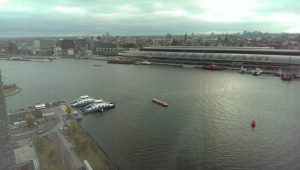
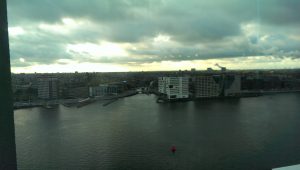
It is new and it is brilliant, the Adam Tower – a remake of the former Shell research labs in Amsterdam. I had a great time this week while giving a presentation about dealing with international business and culture in front of spectacular views over Amsterdam. Nevertheless my public was highly attentive, for a moment I doubted whether they would be with me at all but they did 🙂
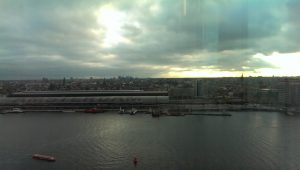
If you look at the photo above and you see the 9 meter high windows in top of the building, that is where I stood – and here are some pictures of the views:

amsterdam tower  amsterdam toweramsterdam tower  amsterdam tower
The making of the Adam Tower is a story out of a wizard book: three Dutch guys who were succesfull in the international music scene decided to cooperate in this and won the battle for the tower in competition with 34 other interested parties. They turned it into a combination of music company offices, a hotel, different bars, restaurants and clubs with a 360° turning restaurant in top: a music tower!
On top they offer a platform for all inhabitants of Amsterdam and our tourists to watch the spectacular panorama and to take a seat in Europe’s highest swing: the Amsterdam lookout. Alas I had serious business to do when I was there so I definitely have to come back to experience that swing!
Our city is blessed with these creative entrepreneurs who make such major contributions to the quality of life in Amsterdam: well done, thank you guys!
Last but not least an photo-impression (made with my phone, lack of quality, in reality much better) of the elevator going up: the music experience starts already from there…
amsterdam tower elevator  amsterdam tower elevator
Adam Tower, a new experience not to be missed!

Other must-visits in or around Amsterdam:
Anne Frank House
Keukenhof: 7 million spring-flowering bulbs
Vlinderado


Bardo Museum – Musée de Bardo Tunis: wowowow!

baptism mosaic
Bardo museum Tunis

If you think many mosaics, think more. If you imagine an endless view of mosaics, double or triple what you imagine and that is what the Bardo Museum in Tunis offers you. I knew the collection of mosaics this museum contains is thrilling but I could not have guessed the amount and the size of the beauty: wow, just wowowow.
‘Are you really going to the Bardo Museum?’, people asked me in surprise. A terrible terrorist attack took place on this museum just two years ago. But of course that means that it is now the best protected monument of the country, Tunisia. Do not hesitate, just go. Nowhere else in the world you will find this abundance of mosaic beauty and such an oversight of mosaic art in different periods and denominations: Roman, Christian, Jewish, Byzantine or just ‘Carthago’.
mosaic bardo museum  mosaic lake bizerte - lac de bizerte
However, that is not all. They have fantastisch Punic pieces (statues, masks, steles), nice jewelry of the Vandals – proving vandalism has beautiful sides! There is some Roman and pottery stuff that I found less interesting; at least it is less unique. But the great Ottoman hall of the Bardo Museum leaves you in surprise, wondering why you find that more beautiful and refined than the Topkapi Palace in Istanbul.
ottoman period bardo museum  ottoman ceiling bardo museum
The rest of the museum is more or less non-existent: the coffee sign leeds to a completely deserted part of the museum where coffee nor any other consumption could be found. The museum shop that could imo be thriving, is a disappointment. The toilets are clean however, kept so by a most gentle attendant. Overall, the museum personnel is really helpful: they want you to enjoy your stay and do everything to make sure you will see what you came for. Only because of their kindness I found the Punic room that I was desperate to see after the mosaics. The logic of the museum plan is not clear for all but the personnel compensates largely for that: a big thanks to their involvement and enthusiasm!
More info at the site of the Bardo Museum in English or the Musée de Bardo in French.

Tip: another spectacular mosaic museum is Zeugma in Gaziantep, Turkey
Interesting ‘open air’ mosaics can be found at the Agios Trias Basilica in Cyprus and in the Villa del Casale in Sicily

Unique coins in Money Museum Tunis

money museum tunis

‘Well, they have coins’, Tunesians told me when I asked them what the Money Museum (Musée de la Monnaie) is like. Their tune was not very respectful, in their eyes it did not seem worth a visit. I wanted to see the museum anyway, especially as it is not mentioned in tourist guides and these can be the most interesting visits like the Museum of the History of Cypriot coinage, another hidden pearl. I was certainly not disappointed.
This museum is found within the Tunesian Central Bank and depicts the history of coinage in the area: that means it starts already in the time of Carthago, 4th century BC. Most interesting for me were the coins from the era of the califates like the Ommayyads, Fatimides, Aghlabides and Abbasides: it was like a new world opening for me. musee monnaie tunisAlready in the first century of islamic era, coins were made with Qu’ran inscriptions and this museum shows a good quantity of them (a lot in gold, part of the attractiveness of course).

Another thing I learned is that coins can be shiite or sunni. First I thought I misunderstood but the proof was in front of my eyes.

shiite coins

shiite coins

sunni coins

sunni coins

I seriously studied these coins but I am afraid my expertise is too limited to understand the subtile differences.
There is, overall, a very good explanation that goes with these coins but not in English: in Arabic and in French. For the coins of the early centuries I must say it was difficult to relate the information given to the coins as exposed. This suddenly improved when the period of antiquities was left behind. From then on, all is clear, although sometimes quite detailed. For experts, this is the absolute place to be.
The museum also shows some interesting notes that tell us which heroes of the past are valuated enough to be on the national banknotes. I saw f.ex. Ibn Rachik, Hannibal, Ibn Khaldoun.
It has many square coins: square coins musee monnaie tunisAnd it presents plenty of memorial coins, and coins of special sites where I found Amsterdam among them.
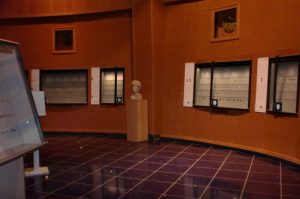
coins about sites musee monnaie tunislibrary musee de la monnaie tunisLast but not least: the library they have offers books in 5 or 6 languages, not just about coinage but also about history and art of the region. It is an excellent collection for those who want to study and it seems to be an undiscovered place: you can sit there in complete tranquillity, surrounded by friendly workers who are happy to welcome anyone interested in their cultural heritage.
The Money Museum (Musée de la Monnaie) of Tunis: worth a visit!

Interested in money? Read here about Money Museum Gaziantep
Also: Heimat Museum Borkum

Training diversiteit in Jordanië: business as usual (2)

diversiteit in jordanië

Training diversiteit in Jordanië, onlangs gaf ik die voor de tweede keer, ditmaal bij een telecom bedrijf. Na de eerste training formuleerde ik een aantal hypotheses, zie de blog: Diversiteit in Jordanië (1) en die houden stand ook na deze nieuwe ervaring:

1. ‘de cultuur in Jordanië is conflictmijdend, mensen leren van jongsaf aan reacties in te schatten en confrontaties te vermijden en ontwikkelen daarom bijzondere antennes‘: ja ja en ja. Zoiets is heel aangenaam in de dagelijkse omgangsvormen, zeker weten dat het ook NL-ers zou verrijken en verblijden! Mits het natuurlijk van twee kanten komt. Ook bespaart het tijd, niet alles hoeft expliciet uitgesproken te worden bij een training diversiteit in Jordanië. Keerzijde is dat als iemand dan een keer iets uitspreekt, er een lang gesprek nodig is want de kwaliteit die in het NL poldermodel uitstekend ontwikkeld is – elkaar ergens halverwege tegemoet komen – is minder ontwikkeld.

2. ‘het zakenleven in Amman wordt niet, zoals te doen gebruikelijk in Nederland en Duitsland, geplaagd door schuldgevoel‘. Blijft overeind. Jordaniërs zijn praktisch, hoe werkt diversiteit & inclusie en hoe moet het werken of hoe willen we dat het werkt en wat gaan we daaraan doen. Zo’n houding is bevrijdend als je principiële en laten we wel wezen, soms oeverloze discussies gewend bent. Gewoon het gewenste resultaat bepalen en daarvoor gaan, heerlijk!

3. ‘de waardering voor objectieve kennis is groot, er is minder ‘mening’ en meer waardering voor bevindingen uit wetenschap‘, was mijn hypothese. Daaraan voeg ik nu toe: en aan ervaringen van elders, om daarvan te leren. En aan kennis over wat de wereldwijde transitie naar een nieuwe economie en governance van ons vraagt. Het lijkt wel of Nederland te maken heeft met de ‘wet van de remmende voorsprong: Nederland loopt voor en lijkt het dus beter te weten, is arroganter. Jordanië loopt evident niet voor en is zeer ambitieus om wel degelijk onderscheidend te zijn in het veld van diversity & inclusion. Heel interessant om mee te maken.

ammanDat Nederland of ‘het Westen’ iets kan leren van het Midden-Oosten staat voor mij inmiddels wel vast. De komende maanden onderzoek ik dit verder, al (samen)werkend in de praktijk, op weg naar vertaling voor westerse organisaties. En net als in de vorige blog, nodig ik graag  mensen met ervaring in die regio uit te reageren ter bevestiging, nuancering of ontkenning van mijn conclusies of aanvulling daarvan. Wordt vervolgd!

Lees ook: Diversiteit in Marokko en Tunesië
En: Seba culture & diversity workshops in Malawi

Recycling plastic: the Amsterdam or the Tel Aviv way?

Recycling plastic Tel Aviv

recycling plastic tel aviv

plastic recycling tel aviv

Recycling plastic Tel Aviv has a nice way to make the inhabitants recycle their plastic bags and bottles. In the streets of Tel Aviv, one finds open bins. Open means: they do not block the view on the road; they are attractive to use because one can see the results of a contribution; and it is hardly vulnerable for vandalism and other more heavy stuff.
What I like too is the artistic sense that comes with these bins. It could have been enough to just place them on the street with the open iron wires, but the persons who created this wanted an extra and added some flowers, butterflies and other details that make life happier.
Compare the bins above to what we have in Amsterdam :
recycling plastic bin amsterdam recycling plastic amsterdam
These are closed recycling bins: one can not see through them and they form a big block, here at a crossroad, that prevents overseeing the streets. Posters that are put on them prevent the use of graffiti but do absolutely not give more joy to the consumer when using the bin for recycling, on the contrary: they are not at all attractive and too many people have never used them yet. I think we should have the Tel Aviv plastic recycling bins: more open to the street and more inviting to use them.

Other blogs you might like:
Security is your friend in Tel Aviv

Security is your friend in Tel Aviv

white night

Security Tel Aviv

White Night in Tel Aviv is an enormous street festival. On balconies, in parks, on the street sides and in squares, acts, music bands, DJ’s and the like have their performance while thousands of people are passing. Security Tel Aviv: how does this city deal with that in a country where attacks on Jewish people (two more attacks on the day of White Night alone) can always be expected?
It means they have controlpoints on every street opening to festival activities. Imagine that this would be done in Amsterdam: it would give a lot of discussion and the poor security officers would have a lot to explain and to deal with. There would be rows at the controlpoints and the idea of controlpoints would prevail over the joy of the festival. Security Tel Aviv means that it is clear that security is essential and it comes first for everybody. The threat is felt as real – so security is your best friend when you go to a festival.
There is no delay at all at the controlpoints. The public acts with discipline and speed: showing quickly what they wear under their shirts, opening bags on time. The only problem I saw, was with a Dutch guy who wanted to go in with a (glass) bottle of whisky, which was not allowed… This is the most efficient security I have ever seen and this way, a festival stays pleasant under difficult and risky circumstances. Even when the average visitor might pass 5-10 controlpoints in a single evening, White Night in Tel Aviv means just high quality performances in a great atmosphere.

Other blogs you might like:
Recycling plastic: the Amsterdam or the Tel Aviv way
Grandfathers, Jews and the impulse to act
Mikvé Israel-Immanuel synagogue
Simone Veil: une vie
Jewish museum Warsaw: context

Ramallah: Jews removing Christians from Middle East

RamallahRamallah is a lively and kind city. During a short trip through the city, at least five people said spontaneaously ‘welcome’ to me. Isn’t that nice? I love tourists in Amsterdam (except when they walk on the biking paths) but I never tell them ‘welcome’; maybe that is a good thing to learn from the Palestinians here! It makes life more beautiful…
Ramallah2Ramallah is also a contradictory town where you can buy the biography of Hillary Clinton at several places as well as Mein Kampf from Hitler, both in Arabic. I met with some police officers who were nice and accepted to have their photograph taken; another spontaneous move I guess, in this region where officials usually say no.
The kindness and politeness of this city’s inhabitants is in strange contrast with the attitude as soon as ‘politics’ enter the arena. Faces become rigid, attitudes harshen, voices turn loud. The people of Ramallah and the Westbank suffer real hardship because of the Israeli occupation. They tell you heartbreaking stories about it, and you don’t want anybody to live that, themselves or with their children.
Somehow, Isreali’s or Jews are to blame for everything here. Most of all I was surprised about the story of a Christian Palestinian who said there is a Jewish plan to remove all the Christians from the Middle East – not just the Westbank – so that the Jews can have all the land and the Americans can claim that Christ was born in the US (in New Jersey for example) and not in the Middle East. When the Americans chased Saddam out of Iraq, they looted the musea of Iraq and sent all the stolen antiquities to Israel so that the real archaeological history could be wiped out. I always thought the Americans didn’t have a clear plan in case they’d win in Iraq and they just forgot to protect the musea but here they are themselves deliberately looting the musea, following a deliberate plan they have together with ‘the Jews’.
My Christian Palestinian continued by telling that the Jews left Egypt and they also left Babylon 7000 years ago and now they want this land, Palestine, for themselves. Wasn’t leaving Babylon closer to 2700 years than 7000 years ago? I am just guessing but 7000 seems way too long ago. ‘Yes’, my Christian Palestine friend says, ‘of course 2700 years ago, that is the same, they left Babylon’. I do not think that that is the same in the ligth of the discussion we are having but my view is ignored.
He thinks the Jews are behind the removal of the Christians from Iran, Iraq, Palestina, Egypt, Syria, Turkey, Libanon and maybe more countries. It is evident that during the last 40 years Christians have been fleeing the Middle East and I have been quite involved in that but this is really the first time in my life that I hear someone tell that this stems from a Jewish plan. How this would serve the Jewish case is not clearly explained. What matters is that ‘they want this country from the sea untill the river since the 19th century’. The Jews crucified Jesus and now try to remove the Christians from Middle East countries. The Americans work with them because that will help them to turn Jesus into an American born citizen.
A nice conversation just turned into a conspiracy theory that divides us into two worlds… I do not know what to answer. I just remain speechless.

Diversiteit in Jordanië: business as usual?

diversiteit jordanie - business as usual
Diversiteit in Jordanië, dat was voor mij nieuw. Toen ik via een Duitse opdrachtgever de vraag kreeg of ik in een bouwbedrijf in Amman – de hoofdstad van Jordanië – een diversiteitstraining wilde geven, zei ik meteen ja maar was ik ook wel verbaasd en een beetje onzeker. Ten eerste had ik een dergelijke vraag niet verwacht vanuit de bouwsector in Jordanië (ziedaar, uw diversiteitsexpert is niet vrij van vooroordelen). Ten tweede was ik nog nooit in Jordanië geweest. Diversiteit is bij uitstek een contextafhankelijk onderwerp en als je uitgaat van diversiteit als businesscase, wat ik doe, moet je terdege weten waar de businesskansen liggen voordat je iets zinvols kunt bijdragen aan diversiteit in Jordanië. Maar ja, zo’n kans krijg je niet elke dag en ik ben altijd al een fan van het Midden-Oosten geweest…

Zo toog ik enkele weken later, na een visum te hebben gehaald bij de Embassy of the Hashemite Kingdom of Jordania in Den Haag en bovendien alles bestudeerd te hebben wat er over het Hashemite Kingdom te bestuderen valt, naar Amman. Na enkele dagen doorgebracht te hebben met ingenieurs, architecten en HR-functionarissen kom ik tot een paar conclusies over diversiteit in Jordanië die ik graag nader zou willen testen:

1. de cultuur in Jordanië is conflictmijdend, mensen leren van jongsaf aan reacties in te schatten en confrontaties te vermijden. Mensen hebben daarom antennes ontwikkeld om te voelen hoe dingen liggen zonder dat ze verbaal worden uitgesproken. Als trainer viel me op dat de deelnemers vaak aan een half woord (of aan mijn gezichtsuitdrukking) genoeg hadden; waar Nederlanders of Duitsers behoefte hebben aan explicitering, kunnen ze in bedrijven in Jordanië ook zonder (ik zeg dus niet: heel Jordanië, het gaat over de zakelijke omgangsvormen).

2. het zakenleven in Amman wordt niet, zoals te doen gebruikelijk in Nederland en Duitsland, geplaagd door schuldgevoel. Waar in een diversiteitstraining gewezen wordt op patronen van uitsluiting, of het nu gaat om gender, cultuur of religie, kunnen deelnemers er vrijelijk om lachen en zich onbevangen afvragen: waarom doen we dat eigenlijk zo?

3. de waardering voor objectieve kennis is groot. Diversiteitstrainingen worden met name in Nederland geplaagd door mensen die ‘een mening’ hebben. In Duitsland is er meer waardering voor bevindingen uit onderzoek en wetenschap en in Amman is dit ruim aanwezig: er is ronduit honger naar kennis. Wetenschappelijke resultaten vinden een open oor en ambitie voor toepassing.

Mijn ervaring met de Duitse opdrachtgever en het Jordaanse bedrijf was zo goed dat ik in juli terug ga voor een vergelijkbare training bij een telecom bedrijf in Amman. Ik ben benieuwd of mijn conclusies (hypotheses) over diversiteit in Jordanië stand houden of gewijzigd worden – hierover zal ik zeker een nieuwe blog schrijven. In het dagelijks leven horen wij meestal negatieve berichten uit het Midden-Oosten. Toch zijn daar bedrijven die al sinds jaar en dag succesvol met diversiteit omgaan, want het Midden-Oosten = diversiteit. Zonder die kerncompetentie kun je daar geen bedrijf runnen. Ik vermoed dat het Westen daarvan kan leren en heb de ambitie daarover meer te ontdekken en dit te vertalen naar de westerse context en behoeften.

De komende maanden ga ik ook naar Israel en Tunesië en mogelijk nog andere landen. Ondertussen ben ik benieuwd naar reacties van mensen met ervaring in die regio ter bevestiging, nuancering of ontkenning van mijn conclusies of aanvulling daarvan. Neem gerust contact op en wordt vervolgd!