

I found Simone Veil’s autobiography Une Vie while buying groceries in the Super-U. In France, culture and quality can be found everywhere, a characteristic that I adore in that country. It is a breathtaking book about a life that started in an ordinary, middle-class way and got heavily interrupted by the Second World War, went through the Nazi death camps and then on to government positions at the highest level of France and Europe. Compared to the intensity of that life, the book is short (343 pages Livre de Poche). There are many chapters where the reader would like to know more because her experiences are unique and give insights one rarely gets.
 Simone Veil was a Holocaust survivor and she was also a major player in France’s after-war period. Une Vie tells a lot about the things she did, but her influence went much further than that because of who she was, a woman with clear principles that she followed in any function she would fulfill: ‘le sens de la justice, le respect de l’homme, la vigilance face à l’evolution de la société‘ (p. 262).
She says she liked politics but not the political game and indeed in her book the description of such games are rarely found. It is about the goals Simone Veil was going for and about what she achieved. The reader can only wonder how she did that. The same goes for all the positions she got – it seems to be just the natural flow of her life and it would be so interesting to learn more how she got there. The political part of Une Vie shows little relations or emotions; if I may criticize Une Vie, the only point by the way: this is not about living a (political) life, it is too factually descriptive for that (though very interesting).
Anyway I highly recommend this book that was translated in many languages; (just) some parts of the book that I found breathtaking:
* the description of the Holocaust, an inside story. ‘l’enfer‘ (p.53-89)
* the question whether governments should have stayed or left their countries during the Second World War. France had the Vichy-régime that collaborated with the Nazis. Simone Veil always thought that was wrong, until she met Queen Beatrix of the Netherlands who told her how heavily her mother Queen Wilhelmina was criticized for leaving to Canada and thus ‘abandoning her people’. ‘aucun événement historique, aucun choix politique des gouvernants, surtout dans des périodes aussi troubles, n’entraîne des conséquences uniformément blanches ou noires‘. (p.46)
 * the letters she got when she fought as Minister of Health for the first Law on Abortion in 1975. The verbal abuse was so terrible that her staff destroyed some letters. Simone Veil regrets that because these letters are witnesses of a history of reform and should have formed study material by now to remember that changes come with pain. ‘il faut rappeler aux esprits angéliques que les réformes de société s’effectuent toujours dans la douleur‘. (p.165)
* in the beginning of her European period she expected that in twenty years countries would go beyond their national frame. She found out that it doesn’t work like that and that everybody looks for their roots. Thus nowadays she compares the EU more to the aggregate of Russian matrushka puppets than a monolithic building. (p. 190)
 * her ideas about human rights that she supported all her life; how militant activists rarely bring peace and rather increase human rights violations because their approach is too one-sided; that there are no universal human rights when it comes to business and other modus vivendi. ‘Au fond, ce sont toujours aux faibles que l’on fait la morale, tandis qu’on finit par blanchir les puissants‘. (p.194)
* Simone Veil concludes that she has become more and more a fighter for women’s rights because equal chances for women are not naturally based in laws or in the rules of the game. ‘Les chances, pour les femmes, procèdent trop du hasard‘. (p.258)
Links:
https://www.theguardian.com/world/2018/jun/30/simone-veil-funeral-paris-pantheon
http://www.theheroinecollective.com/simone-veil/
https://www.editions-stock.fr/livres/essais-documents/une-vie-9782234058170
https://www.trouw.nl/cultuur/simone-veil-succesvol-omdat-ze-een-vrouw-is~abb3e42e/
Other blogs you might like:
Mikve Israel-Immanuel synagogue: religious pearl in orange-loving Willemstad
‘Why are people like this?’ Boualem Sansal

 Such a fabulous museum, the Vesunna Gallo-Roman Museum in Périgueux! A complete villa (‘domus’) has been covered and integrated into a museum together with many very interesting Gallo-Roman objects found – and with a surrounding parc that shows the beautiful and quite well preserved Vesunna Tower. To do so was not just an ambitious idea, it has effectively been realized in an impressive way.


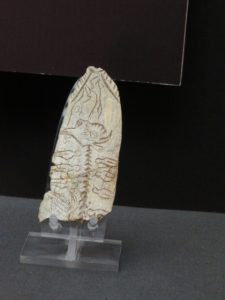 me and the prehistoric part of the museum reflects this period with very interesting findings. A dazzling collection of different stone hand axes is just the beginning. All kind of instruments useful in daily prehistoric work are presented in many shapes – and some beautiful pieces show craftmanswork like the pendant with a bison head (Magdalenien era, 15.000 BC, exact function unknown.

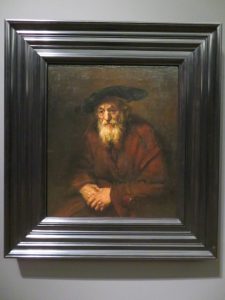
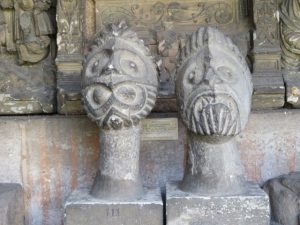 ostly mediëval stuff, I highly recommend that you take a quiet walk through the cloister just to enjoy the many details in the pieces you see there. Also the rooms with art are very nice with a great variety of interesting art objects but I am not into art myself so this blog does not describe more than just the encouragement to visit.
 benefits of the



 verview of it’s history and socio-economic life. You learn about the history of whalers, find a full whale skeleton and of course the famous little seals, see a complete
  room, kitchen and laiterie like they had in the old times; but apart from that, there are many great, even amazing artefacts that tell you maybe even more about life in Borkum. This was a museum that gave me much more than I expected when I entered. It is impossible to resume, so I show you here the artefacts that impressed me most:
 A garland made out of the hair of the deceased… Elsewhere in the museum, jewelry made out of female hairs can be found. My mouth fell open; I find it a bit spooky but here it seems to be a piece of art. One thing is sure, the results are beautiful!
 A 18th century cistern where water was collected both from the rain and from groundwater. It is big and covered with Dutch blue painted tiles who were valuable already in that era so the owner must have been very rich. The cistern kept the water cool and fresh. It is quite unique, no other cistern like this was found in the north of Germany.
 A 19th century bucket that served to collect the household money. It hang at a beam in the kitchen. That is what attracted my attention; that there were times where people hang their money in a bucket in the kitchen…. I liked the idea that it was safe there, out in the open!


 und at the beach of Borkum in 1971: a silver coin that was made in Hedel, the Netherlands which is…. the village where I was born. There is a long story to tell about coins from my native village Hedel … another time… For now: I was – happily – surprised to find this particular coin so far away from home. It proves that you will never know how far the things you make can reach, and that the extent to what it reached can be observed until centuries afterwards… so great!

 r. It shows how much the Netherlands progressed in the cultivation of orchids.
 full flowers now! If you go to the Keukenhof, do not forget to wander a bit around in that area: you’ll love it, no doubt about that.

 Monastery in a divided island
 And they show their power by calling the primary school of Dipkarpaz the ‘Recep Tayyip Erdogan School’ and the large square in front of the Apostolos Andreas Monastery the ‘Bülent Ecevit Square’; Ecevit was the Turkish Prime Minister in 1974 who decided to send the army into Cyprus to help the Turkish Cypriots. It is a strange pattern since over 40 years now of Greek Cypriots Always complaining as if they have no role whatsoever in what is happening, and the Turks showing muscles instead of empathy.
 the sign to remember that moment is still on the wall inside the church (see the photograph on the right). In 1974 the Island of Cyprus was divided in a Northern and Southern part. The Greek Cypriots inhabitants of the village that then was called Stylloi, went to the South while Turkish Cypriots who lived in Mouttagiaka / Mutluyaka, an old Osman village in the very South of the island, resettled in Stylloi in the North and renamed the village of Stylloi after the village they left.
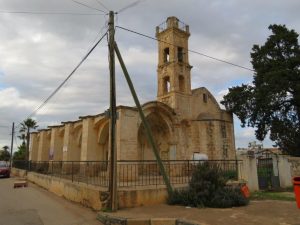
 As the church of Saint Helias is quite new, there is not a lot to tell about it. The amount of concrete used is too big to call it ‘lovely’ like many other Greek churches still are. Inside, it was stripped of almost all objects, as you can see in the photograph I took.
 at the main porch.
 On the front side of the church, both the
  Turkish and the Turkish Cypriot flag were present which could indicate some kind of actual use. Alternative activities are not necessarily a disadvantage for a building, although I know that it is hard for Greek Cypriots to see their heritage used for other religious or nationalist purposes. When it comes to preservation, in Northern Cyprus churches that have been used or are still used, often show a much better state of affairs than empty churches that fall into the hands
  (feathers and dirt) of birds, rain and wind. Empty and deserted churches (since 1974 = for decades) have step by step fallen into decay – here are
 mality, the field-like aspect of the place. That spot looks like ‘the middle of nowhere’ and everybody knows nothing happens in the middle of nowhere. So how did these heavy things occur right here? It would be reassuring if a place where very bad things happen, had some kind of special sign or mark. But
 there is none. Of course now
  there is a monument and a man made statue in the former mass grave. Information boards tell visitors that abnormal activities took place here; but this information board is broken. Somehow, remembering does not seem to be serious business. It really irritates me to find broken information boards in memorial places like this, like I wrote in the
  ‘this monument was erected in memory of these 37 martyrs who did not flee from their village, and defended the honor of the Turkish flag on the cost of their lives‘. I found it difficult to read this text neutrally.
 They are not always logical or consistent and that gives it a pure and attractive style. It flows the way locals tell a story and you follow their story line without even breathing.
 There is only one lesser thing to tell about the book, and that is the English translation. I am sorry that I did not buy the Turkish version because on several occasions the English translation is so bad that it is difficult to find out what was meant originally. I could have bought even both versions, for 10 TL per book it is very affordable. But I didn’t, alas. Now, I give you my analysis of some aspects of this book.
 shows the list of individual names and photographs of these 89 persons and those
  This somehow increases the impression that is made on the observer. Some photographs are vague, it seems that that was the best they could find for the book. At least some memory is given to us, even though it is imperfect.
 As a book, there are quite some technical failures – but that is maybe why this book is so interesting. It is pure and it is a direct message both from the deceased and from the survivors. There was clearly nobody ‘in between’ to interprete, to correct or to think about how to get the message across. The message is just the message. Remembering in this book is about hearing and listening to authentic stories.
 Other survivors say they saw loose body parts at the excavation, which is, combined with atrocities elsewhere in the Middle East, probably the explanation for the idea that there was decapitation. There are some claims that the attackers threw locals from the mosque, raped the women, dragged them on a rope behind a bus or burned the bodies. There are also claims that victims were buried while still alive.

